Integrated Ayurvedic Care for Chronic Neurological Conditions bringing the best of Ayurveda with modern rehabilitation sciences like Physiotherapy, Speech therapy, Occupational Therapy, Behavioral Therapy, and Yoga.
Integrated Ayurvedic care for Stroke rehabilitation, Multiple sclerosis, Parkinson's disease, Migraine, Bell's palsy, Peripheral Neuropathy, Chronic insomnia and other Neurological conditions.
Conditions We Treat in Neurological diseases
Our Physicians for Neurological diseases
Experienced Ayurvedic physicians who lead treatment in this clinical area.
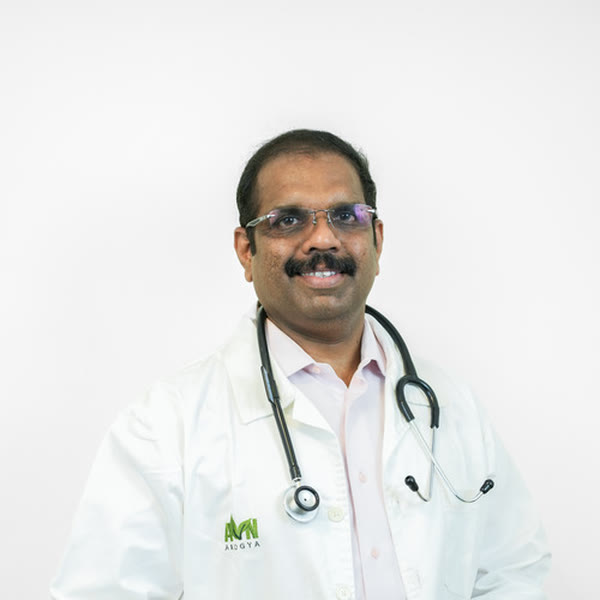
Dr.Biju Madhavan
Chief Consultant Physician
BAMS, MD (Ayurveda)
Dr. Sridevi Rajeev Warrier
Medical Director & Senior Consultant Physician
BAMS, (Gold Medalist)
Dr. Ramesh R. Varier
Senior Consultant Physician & Managing Director
BAMS, (Gold Medalist) & Guru under RAV, Clinical Hypnotherapist
Dr. Chippi
Senior - Physician
BAMS.,
Dr. Keerthy S. Namboodiri
Senior Physician
BAMS, MD (Ayurveda - Paediatrics)
Neurological diseases — Overview & Ayurvedic Understanding
Our Neurological Speciality supports patients with stroke rehabilitation, Parkinson's disease, Bell's palsy, Multiple sclerosis, and Peripheral neuropathy, post-viral neurological syndromes, Migraine, Trigeminal neuralgia and Sleep disorders. Ayurvedic neuro-therapies work alongside modern rehab and medication where needed to improve quality of life, function, and recovery trajectory.
Symptoms of Neurological diseases
Weakness, paralysis, or loss of coordination
Tremors or involuntary movements
Severe recurring headaches (migraine)
Facial pain or muscle weakness
Sensory disturbances — numbness, tingling, burning
Cognitive changes or memory difficulty
Causes & Risk Factors for Neurological diseases
Cerebrovascular events (stroke)
Neurodegenerative processes (Parkinson's, MS)
Nerve compression or inflammation
Viral neurological sequelae
Migraine triggered by stress, hormones, or dietary factors
Idiopathic or genetic causes
How We Diagnose Neurological diseases
Full neurological examination by senior physician. Review of neurologist reports, MRI brain / spine, nerve-conduction studies. Full fledged Ayurvedic Assessment and protocol finalisation by multi disciplinary team.
Key Outcomes
Meaningful functional improvement in 70-80% of post-stroke patients (4-6 weeks IP)
Migraine frequency reduction of 50%+ in most chronic-migraine patients with only medication. Very few patient s require Panchakarma.
Post-Bell's-palsy: 85%+ recover full function within 2-3 weeks with early Ayurvedic care
Improved motor scores and activities of Daily Living in Parkinson's, Multiple sclerosis etc. We do not recommend stoppage of Allopathic medication but supplement it with neuro-regenerative herbal supplements and medicines along with rehab therapies from Ayurveda and Modern sciences. ‘
Treatment Pathways for Neurological diseases
Outpatient (OP)
After an initial consultation, the physician advises the right pathway for you. Some conditions can be supported with outpatient medicines and home guidance, while many neurological conditions respond best to structured visiting therapy or an inpatient rehabilitation programme.
Book OP Appointment →Inpatient Program
Intensive residential treatment with daily Panchakarma, physiotherapy, yoga, and dietary management.
Typical duration: 40-60 days for Stroke rehab. For Parkinson’s and MS 21-28 days. Sleep and stress related problems 14-28 days depending on the severity.
Learn About IP Care →Ayurvedic Treatment Approach for Neurological diseases
Neurological care at AVN integrates modern neurology with classical Ayurvedic therapies. Whether the patient is recovering from stroke, managing Parkinson's, or living with multiple sclerosis, the treatment plan is individually crafted integrating the depth of Ayurvedic principles with modern neurology. At AVN Arogya, there is no fixed protocol.
Every patient's programme is designed personally by the treating physician based on the specific stage of the disease, the current inflammatory state, the dosha vitiation pattern, constitutional type (Prakriti), and individual response to treatment. This physician-crafted approach — refined across four generations of AVN clinical practice — is what makes our care genuinely personalised rather than packaged. A degenerative presentation with an inflammatory override, for example, is never treated with strengthening therapies at the outset — anti-inflammatory measures are prioritised first, and rebuilding therapies are introduced only when appropriate.
Medicines, herbal combinations, and internal formulations are equally individualised: what works for one patient's presentation will not necessarily suit another's. Your programme will draw on the full range of classical Ayurvedic tools — Panchakarma (the five purification procedures), Kerala therapies, Upakarma (supportive procedures). The specific selection, sequence, and duration are decided by your physician.
See the 'Therapies that may be part of your programme' section below for examples of what this can include.
Ayurvedic Therapies for Neurological diseases
These are examples of classical Ayurvedic therapies that may be selected for your programme depending on your condition, stage, and constitutional type. Your treating physician decides which therapies are appropriate — no two programmes are the same.
Gandoosham
AdjunctiveFull-capacity holding of warm medicated oils in the mouth to strengthen teeth, gums, and jaw alignment.
Learn about this therapy →
Netra putapakam
AdjunctiveAn advanced ocular therapy utilizing specialized baked-herbal juice extracts to cleanse and deeply tone the eyes.
Learn about this therapy →
Akshi tarpanam
AdjunctiveA soothing treatment where eyes are bathed in warm medicated ghee to treat dry eyes, blurred vision, and screen fatigue.
Learn about this therapy →
Upanaham
AdjunctiveA deeply penetrative hot herbal poultice application bound overnight to melt away chronic joint stiffness and deep pain.
Learn about this therapy →
Bandhanam
AdjunctiveA therapeutic herbal immobilization wrap used to stabilize weak or injured joints and accelerate deep ligament healing.
Learn about this therapy →
Navarakizhi
Kerala TherapyTherapeutic massage with boluses of cooked medicinal rice in warm medicated milk — one of the most restorative Kerala therapies.
Learn about this therapy →
Elakizhi
Kerala TherapyTherapeutic massage with boluses of fresh medicinal leaves warmed in medicated oil — excellent for inflammatory-painful joint conditions.
Learn about this therapy →
Takradhara
Kerala TherapyContinuous pouring of medicated buttermilk over the forehead or body — the signature therapy for chronic Pitta-dominant conditions.
Learn about this therapy →
Navaratheppu
Kerala TherapyA direct rub massage using a warm paste of cooked medicinal Navara rice and milk to nourish weak muscles and restore energy.
Learn about this therapy →
Your physician may also include Tailadhara, Kadidhara, Podi kizhi, Panchakarma, Virechanam, Vasti, Nasyam, Shamana nasyam, Abhyangam, Udwarthanam, Shirodhara, Thalapothichil, Pichu, Talam or Shirovasti, depending on your presentation.
Treatment Outcomes for Neurological diseases
Patients with stroke recovery is based on several factors including severity of the insult, the area of brain affected, the duration of before commencement of treatment, age, general health etc., However, most patients who are brought within a month of stroke, recover significantly in some cases with ability to manage themselves without support, individual walking capability without assistance, speech recovery and improved activities of daily living.
Similarly in Neuro-degenerative and immune modulated disease diseases like Parkinson’s, Multiple sclerosis (MS) etc, patients experience significant improvement in functional capability, cognitive function, sleep, and other activities of daily living.
Chronic migraine sufferers commonly see 60-70% reduction in attack frequency over 3-6 months.
Bell's palsy and facial paralysis patients recover most facial function within 2-3 months when treated early.
Peripheral neuropathy symptoms improve substantially for most diabetic patients after sustained treatment.
How the Treatment Works
Step 1
Neurological Assessment
Day 1
Comprehensive evaluation combining modern and Ayurvedic frameworks.
- •Senior physician examination + neurologist report review
- •MRI / NCV / EMG interpretation
- •Functional scores (Barthel Index, UPDRS, MIDAS)
- •Coordination with treating neurologist
Step 2
Integrated Neuro Protocol
Days 2-21
Daily Shirodhara, Nasya, Pizhichil and targeted internal medicines.
- •Shirodhara for stress and autonomic regulation
- •Nasya for upper-body neurological conditions
- •Pizhichil or Abhyanga for motor function
- •Structured physiotherapy and speech therapy where needed
Step 3
Long-Term Neuro Support
Month 1-12
Home medicines, caregiver training, and staged reviews.
- •Caregiver coaching on home-therapy continuation
- •3-month Rasayana for nerve support
- •Monthly teleconsult reviews
- •Annual 7-day booster programme for chronic conditions
Why AVN Arogya for Neurological diseases
Integrated Neuro Team
Senior physicians, physiotherapists, speech therapists, and nutritionists work as a coordinated team for complex neurological cases.
Safe Alongside Modern Medicines
Our protocols are designed to complement — not replace — neurologist-prescribed medication. Drug-herb interaction screening at intake.
Stroke Rehab Expertise
One of the few Ayurvedic centres in India with a structured post-stroke rehabilitation pathway integrating Ayurveda with standard physiotherapy.
96-Year Legacy
Four generations of specialised neurological Ayurveda practice at AVN — a depth of clinical experience that's hard to find elsewhere.
Recovery Timeline
Day 1-3 — Neurological Diseases
Admission, comprehensive assessment, first Shirodhara and Abhyanga sessions.
Week 1-2 — Neurological Diseases
Daily integrated therapies. Initial signs of improvement — better sleep, reduced tremor, improved mobility.
Week 3 (Discharge) — Neurological Diseases
Functional re-scoring. Home protocol + caregiver training completed.
Month 3 — Neurological Diseases
First review teleconsult. Home-programme adjustments. Continued measurable improvement.
Annual Booster — Neurological Diseases
7-day booster admission maintains gains for chronic neurological conditions.
Neurological diseases Treatment Cost & Programme Pricing
Inpatient treatment is INR 6,000-19,000 per day, all inclusive, depending on the room category chosen. Outpatient therapy is about INR 2,000-3,000 per day. Medicines cost about INR 2,000-10,000 a month, depending on the condition. Cashless insurance accepted through 35+ empaneled TPAs. Financing options through EMIs available. The number of days you need depends on your own condition and is decided by the treating physician after assessment.
For condition-specific programme costs with all pathways (OPD, Visiting Therapy, Inpatient) and room-category breakdowns, open any condition above. For accommodation details and room pricing, see our inpatient rooms.
Why Choose AVN Arogya for Neurological diseases?
We come with Decades of clinical experience in Ayurvedic neurology.
Senior consultant physicians provide continuity of care for out-of-station patients. through video consultations.
Evidence-based protocols with transparent outcome tracking.
Coordinated rehab including Physiotherapy, Occupational Therapy, Speech therapy and Yoga in addition to your Neurologist’s recommendations.
We complement, we don't replace.
And why AVN Arogya at all
- Trust built on four generations and over 96 years of Ayurveda-based healing, evidenced by the patients we have treated and the testimonials they have given.
- Tamil Nadu's first Ayurvedic hospital to be NABH accredited — a testimony to our commitment to the quality of patient care.
- Doctors who give you a patient hearing, assess in detail using both modern diagnostics and holistic Ayurvedic methods, and make honest recommendations with options to suit your condition.
- Treatment protocols personalised to your situation, including the mode of treatment that fits it — outpatient, day care or inpatient.
- A holistic approach spanning diet, lifestyle, psychological support, pure Ayurvedic medicines and external applications, Panchakarma, Upakarma and Kerala speciality therapies, physiotherapy, rehabilitation and yoga where applicable.
- Safe and effective Ayurvedic medicines manufactured in-house and tested to international standards for heavy metals.
- Cashless inpatient treatment through tie-ups with 35 insurance companies and TPAs.
- Interest-free EMI on inpatient treatment, over 3 to 18 months, through our financing partners.
- Corporate tie-ups for screening camps, teleconsultations and inpatient treatment funded by corporate health programmes or insurance.
NABH accreditation covers the Vilachery hospital in Madurai. Cashless cover applies to inpatient treatment at the Vilachery hospital.
Patient Success Stories for Neurological diseases
Real outcomes from real patients — watch their recovery journeys.
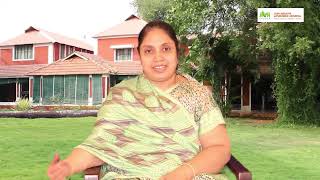
Shoukath Ali, Chennai
Parkinsonism (balance disorder)
Mr. Shoukath Ali's testimonial is given by his wife. He had an imbalance problem for about one and a half years, staggering and falling three to four times a day in their hometown, causing the family great worry. They travelled from Chennai after hearing about AVN Arogya through her sister. Under Dr. Rajesh he was admitted for about 21 days and received morning and evening Ayurvedic treatments along with physiotherapy and yoga. The family reports he is now well with good improvement and expresses strong satisfaction with the attentive care.
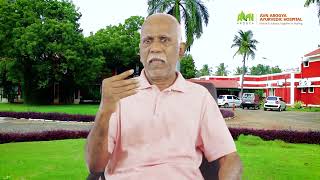
Vishwanath, Tiruchirappalli (Trichy)
Parkinson's Disease
Mr. Vishwanath, from Tiruchirappalli (Trichy), came to AVN Arogya with Parkinson's. He described three main problems: loss of balance while walking with a fear of falling, slowness and difficulty rising from a seated position with hip stiffness, and reduced control of his right hand that left him unable to eat or write. Referred by an acquaintance from Tiruppur, he was treated under Dr. Sridevi. He reports clear improvement during treatment, praises the care as first-class, and says the left knee pain he previously had has completely resolved.
Nagalingam, Karaikudi
Parkinsonism & Hydrocephalus (Ayurvedic supportive care)
Mr. Nagalingam, 73, from Karaikudi, developed Parkinsonism-like symptoms alongside hydrocephalus. He first consulted a neurosurgeon in Bangalore but saw little improvement. He then came to AVN Arogya, Madurai, taking OPD medicines for about two months before being admitted for roughly 14 days. Treatment included classical Ayurvedic therapies such as oil massage, powder massage and nasal therapy (nasya). He reports partial improvement: reduced neurological symptoms, better walking ability and less difficulty writing by hand. He praised the hospital's calm natural setting, punctuality and attentive care.
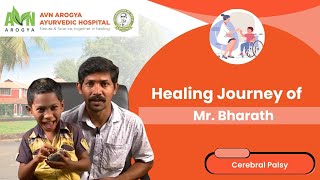
Bharath, Coimbatore
Cerebral Palsy
Bharath, from Coimbatore, is featured in an AVN Arogya patient testimonial for Cerebral Palsy. The video reports treatment at AVN Arogya (Madurai) with Ayurvedic care (Panchakarma and herbal medicines) and a positive recovery. (Based on the video description; condition-level summary — enrich later if verbatim detail is needed.)
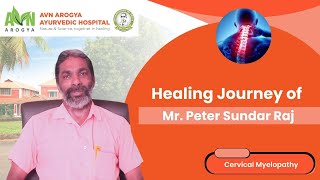
Peter Sundar Raj, Kodaikanal
Neurological condition
Mr. Peter Sundar Raj from Kodaikanal was suffering from Cervical Myelopathy, a serious condition caused by compression of the spinal cord in the neck. The video reports treatment at AVN Arogya (Madurai) with Ayurvedic care (Panchakarma and herbal medicines) and a positive recovery. (Based on the video description.)
Ganesan, Rajapalayam
Diabetic Neuropathy
Mr. Ganesan from Rajapalayam visited AVN Arogya Ayurvedic Hospital, Madurai, suffering from severe burning pain in the soles of his feet due to Diabetic Neuropathy. The video reports treatment at AVN Arogya (Madurai) with Ayurvedic care (Panchakarma and herbal medicines) and a positive recovery. (Based on the video description.)
Have a Question About Neurological diseases?
Tell us about your condition or ask anything about how we treat Neurological diseases. Leave your details and our team will get back to you.
Start Your Neurological diseases Treatment
Book a consultation to assess your condition and get a personalised treatment plan.
Ayurvedic & Medical Terms for Neurological diseases
View Full Glossary →Abhyanga
Full-body therapeutic oil massage using warm medicated oils. Improves circulation, relieves muscle tension, nourishes tissues, and calms the nervous system. A foundational therapy in Panchakarma.
Dhatu
The seven bodily tissues in Ayurveda — Rasa (plasma), Rakta (blood), Mamsa (muscle), Meda (fat), Asthi (bone), Majja (marrow/nervous tissue), and Shukra (reproductive tissue). Health reflects the integrity of the dhatus.
Nasya
Nasal administration of medicated oils or herbal preparations. One of the five Panchakarma procedures. Treats sinusitis, migraine, cervical problems, and neurological conditions.
Pizhichil
Kerala therapy where warm medicated oil is continuously poured over the body in rhythmic streams while being gently massaged. Used for paralysis, muscle wasting, arthritis, and rejuvenation.
Sciatica
Pain that radiates along the path of the sciatic nerve — from the lower back, through the buttock, and down the back of the leg. Most commonly caused by lumbar disc herniation or spinal stenosis compressing the nerve root.
Shirodhara
Continuous pouring of warm medicated oil in a steady stream on the forehead (third eye). Deeply calming therapy for insomnia, anxiety, migraine, stress, and neurological conditions.
Vasti
Medicated enema therapy — the most important of the five Panchakarma procedures for Vata disorders. Uses herbal decoctions and oils to treat disc disorders, arthritis, neurological conditions, and chronic pain.
Vata
The dosha governing all movement — nerve impulses, breathing, circulation, elimination, and joint mobility. When imbalanced, causes pain, stiffness, anxiety, insomnia, and neurological disorders.
Anti-inflammatory
Any substance that reduces inflammation -- the body's response characterised by redness, swelling, heat, and pain. Both conventional drugs (like NSAIDs) and Ayurvedic formulations (like Dhanyamla) have anti-inflammatory properties.
Dosha
The three fundamental bio-energies that govern all physiological and psychological functions: Vata (movement), Pitta (metabolism), and Kapha (structure). Disease arises from their imbalance.