Holistic Ayurvedic Care for Knee Avascular Necrosis — Avoid Joint Replacement & Restore Weight-Bearing Mobility
Non-surgical Ayurvedic treatment for avascular necrosis of the knee joint, preserving natural bone structure.
AVN - Knees — Overview & Ayurvedic Understanding
Avascular necrosis (osteonecrosis) of the knee occurs when blood supply to the knee bone is disrupted, causing bone tissue to weaken and potentially collapse. While less common than hip AVN, knee AVN can causes significant pain and mobility limitation. Early detection via MRI and prompt treatment can halt progression and promote bone regeneration without the need for knee replacement surgery.
Symptoms of AVN - Knees
Gradual onset knee pain (often one-sided), pain that worsens with weight-bearing, swelling around the knee, stiffness and reduced range of motion, limping, pain that increases at night or during activity.
Causes & Risk Factors for AVN - Knees
Corticosteroid use (most common), alcohol overuse, blood clotting disorders, trauma or injury to the knee, autoimmune conditions requiring immunosuppressive therapy, post-COVID complications, idiopathic (no identifiable cause in some cases).
How We Diagnose AVN - Knees
MRI of the knee (gold standard — detects early AVN before X-ray changes), X-ray (AP and lateral views), blood tests including lipid profile, coagulation studies, and inflammatory markers to identify underlying causes.
AVN - Knees — Surgery vs Non-Surgical Ayurvedic Treatment
When Surgery Is the Right Path
Knee replacement may be necessary for Grade 4 AVN with advanced collapse and arthritic changes. We provide honest assessments and refer to orthopaedic specialists when surgery is the better option.
We maintain transparent referral relationships with leading orthopaedic and specialist surgeons.
Symptoms Associated With AVN - Knees
These symptoms commonly occur with AVN - Knees. Having one does not mean you have the condition — they are starting points for a conversation with a physician, not a diagnosis.
Ayurvedic Therapies for AVN - Knees
These are examples of classical Ayurvedic therapies that may be selected for your programme depending on your condition, stage, and constitutional type. Your treating physician decides which therapies are appropriate — no two programmes are the same.
Upanaham
AdjunctiveA deeply penetrative hot herbal poultice application bound overnight to melt away chronic joint stiffness and deep pain.
Learn about this therapy →
Bandhanam
AdjunctiveA therapeutic herbal immobilization wrap used to stabilize weak or injured joints and accelerate deep ligament healing.
Learn about this therapy →
Lepanam
AdjunctiveAn application of a thick, targeted herbal paste over specific body areas to quickly draw out inflammation, pain, or skin impurities.
Learn about this therapy →
Navarakizhi
Kerala TherapyTherapeutic massage with boluses of cooked medicinal rice in warm medicated milk — one of the most restorative Kerala therapies.
Learn about this therapy →
Elakizhi
Kerala TherapyTherapeutic massage with boluses of fresh medicinal leaves warmed in medicated oil — excellent for inflammatory-painful joint conditions.
Learn about this therapy →
Navaratheppu
Kerala TherapyA direct rub massage using a warm paste of cooked medicinal Navara rice and milk to nourish weak muscles and restore energy.
Learn about this therapy →
Ajavit kizhi
Kerala TherapyA specialized, traditional dry bolus therapy designed to relieve severe sciatic pain and deep nerve compression.
Learn about this therapy →
Tailadhara
Kerala TherapyA luxurious, highly therapeutic continuous pouring of warm medicated oils to nourish nerves, soothe anxiety, and deeply hydrate tissues.
Learn about this therapy →
Kadidhara
Kerala TherapyA continuous, rhythmic pouring of warm, fermented herbal grain liquid to combat deep-seated inflammation, fluid retention, and stiffness.
Learn about this therapy →
Your physician may also include Manjal kizhi, Podi kizhi, Janu Vasti, Matra vasti, Kashaya vasti, Sneha vasti, Abhyangam, Snehapana or Swedanam, depending on your presentation.
Our Specialists for AVN - Knees
These physicians have specialist expertise in AVN - Knees and typically lead the clinical decisions for complex cases. Any of them can assess and plan your programme — book with whoever's availability works for you.
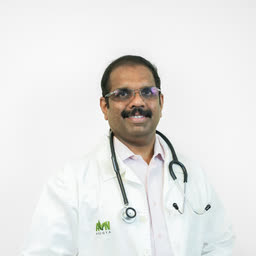
Dr.Biju Madhavan (BAMS, MD (Ayurveda))
Chief Consultant Physician
Expertise: Musculoskeletal disorders, Spine & Joint rehabilitation
Primary Clinic: Madurai — AVN Arogya Ayurvedic Hospital - Madurai
Languages: English, Tamil, Hindi, Malayalam
Dr. Ramesh R. Varier (BAMS, (Gold Medalist) & Guru under RAV, Clinical Hypnotherapist)
Senior Consultant Physician & Managing Director
Expertise: AVN, MS, Chronic musculoskeletal diseases, Fertility
Primary Clinic: Madurai — AVN Arogya Ayurvedic Hospital - Madurai
Languages: English, Tamil, Malayalam, Hindi
Dr. Chippi (BAMS.,)
Senior - Physician
Primary Clinic: Madurai — AVN Arogya Ayurvedic Hospital - Madurai
Languages: English, Malayalam, Hindi, Tamil
Dr. Geethu Sajan (BAMS )
Senior Physician & Clinic-In-Charge
Primary Clinic: Chennai — AVN Arogya Ayurvedic Centre - Velachery
Languages: English, Tamil, Malayalam, Hindi
Physicians Available for Consultation
For first consultations, follow-ups, and routine care, any of these physicians from our broader clinical team is available. Complex cases are always referred to the specialists above.
Dr. Sridevi Rajeev Warrier (BAMS, (Gold Medalist) )
Medical Director & Senior Consultant Physician
Expertise: Panchakarma, Autoimmune conditions, Women's Health
Primary Clinic: Madurai — AVN Arogya Ayurvedic Hospital - Madurai
Languages: English, Tamil, Hindi, Malayalam
Dr. Sreejith (BAMS)
Senior Physician
Expertise: General Ayurvedic medicine, Metabolic disorders
Primary Clinic: Madurai — AVN Arogya Ayurvedic Hospital - Madurai
Languages: English, Tamil, Malayalam, Hindi
Dr. Sreeja Biju (BAMS, )
Senior Physician
Expertise: Panchakarma, Chronic pain management
Primary Clinic: Madurai — AVN Arogya Ayurvedic Hospital - Madurai
Languages: English, Tamil, Malayalam
Dr. Arya (BAMS)
Physician
Primary Clinic: Madurai — AVN Arogya Ayurvedic Hospital - Madurai
Languages: English, Tamil, Malayalam
Dr. Unnikrishnan (BAMS, MD (Ayurveda))
Physician
Primary Clinic: Madurai — AVN Arogya Ayurvedic Hospital - Madurai
Languages: English, Tamil, Malayalam, Hindi, Kannada
Dr. Keerthy S. Namboodiri (BAMS, MD (Ayurveda - Paediatrics))
Senior Physician
Expertise: Musculoskeletal disorders, Paediatric cases
Primary Clinic: Madurai — AVN Arogya Ayurvedic Hospital - Madurai
Languages: English, Tamil, Hindi, Malayalam, Kannada
Dr. Keerthika (BAMS)
Physician
Primary Clinic: Madurai — AVN Arogya Ayurvedic Hospital - Madurai
Languages: Tamil, Malayalam, English
Dr. Sheha (BAMS)
Physician
Primary Clinic: Madurai — AVN Arogya Ayurvedic Hospital - Madurai
Languages: Tamil, English, Malayalam, Hindi, Kannada
Not sure which physician to book with? Send us your reports and we'll match you with the best fit.
WhatsApp for Help Choosing →The start of the treatment process for AVN is a consultation. Where the doctor looks at the entire details and decides the suitability of our treatment for that particular patient and tentative time frame, whether 21 days are enough or whether some extension may be required. The first course of treatment is invariably an inpatient treatment of 21 days, following which there will be follow-up review consultations at the OP and recommendations for medicines, supplements, exercises, diet, lifestyle, etc. on an ongoing basis.
Treatment cost
We do not publish a price for avn - knees treatment, and that is deliberate. AVN Arogya does not use fixed protocols — the treating physician designs each programme individually, and it is that protocol which determines the cost.
It is only at the end of your consultation that the physician can say which kind of care you actually need:
- Outpatient — medicines to take at home, with review visits. The least involved option, and for many people it is enough.
- Visiting therapy — you come in for therapy sessions over a period and return home the same day.
- Inpatient admission — you stay with us for intensive daily therapy. Here the estimate also depends on the duration the physician recommends and the room category you choose.
Once those are decided we give you a written estimate for your own plan, including what your insurance is likely to cover. Quoting a figure before the assessment would mean quoting one that may not apply to you.
Get a cost estimateWhy Choose AVN Arogya for AVN - Knees?
Our specialised protocols for bone regeneration have helped thousands of patients preserve their natural joints.
Integrative Multi-Disciplinary Rehabilitation: Seamless synthesis of classical Ayurvedic Asthi-Majja therapies and Ksheera Vasti enema protocols with modern Physiotherapy (isometric quad strengthening) and clinical Yoga Therapy for lower-limb alignment and biomechanical stabilization.
Physician-Led & Grade-Specific Personalization: Treatment plans are individually customized by senior Ayurvedic physicians based on the location of necrosis (femoral condyle vs. tibial plateau), collapse risk, inflammatory state, and functional capacity.
And why AVN Arogya at all
- Trust built on four generations and over 96 years of Ayurveda-based healing, evidenced by the patients we have treated and the testimonials they have given.
- Tamil Nadu's first Ayurvedic hospital to be NABH accredited — a testimony to our commitment to the quality of patient care.
- Doctors who give you a patient hearing, assess in detail using both modern diagnostics and holistic Ayurvedic methods, and make honest recommendations with options to suit your condition.
- Treatment protocols personalised to your situation, including the mode of treatment that fits it — outpatient, day care or inpatient.
- A holistic approach spanning diet, lifestyle, psychological support, pure Ayurvedic medicines and external applications, Panchakarma, Upakarma and Kerala speciality therapies, physiotherapy, rehabilitation and yoga where applicable.
- Safe and effective Ayurvedic medicines manufactured in-house and tested to international standards for heavy metals.
- Cashless inpatient treatment through tie-ups with 35 insurance companies and TPAs.
- Interest-free EMI on inpatient treatment, over 3 to 18 months, through our financing partners.
- Corporate tie-ups for screening camps, teleconsultations and inpatient treatment funded by corporate health programmes or insurance.
NABH accreditation covers the Vilachery hospital in Madurai. Cashless cover applies to inpatient treatment at the Vilachery hospital.
Conditions Related to AVN - Knees in Avascular Necrosis
AVN - Knees Patient Success Stories
Real patients who recovered from AVN - Knees at AVN Arogya.
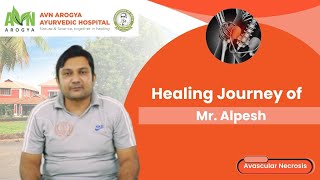
Alpeshfrom Rajkot
Mr. Alpesh, from Rajkot, was treated at AVN Arogya for Stage 3 avascular necrosis (AVN) and recovered without surgery. He describes the care as fully Ayurvedic and says he can now carry out his daily routine and work easily with no problems. He strongly urges others to visit AVN before opting for an operation. The video is presented as an AVN Stage 3 recovery achieved without surgery.
Surgery Avoided
Venkata Ramesh Babu
Mr. Venkata Ramesh Babu developed avascular necrosis of the right hip - around 30% femoral-head damage - which he attributes to steroid use that reduced blood circulation to the bone. Not wanting to replace his natural joint, he searched for an alternative to surgery and came to AVN Arogya in March 2022. He was told the condition could be halted at its current stage so he could resume normal activities, and with Ayurvedic therapy and physiotherapy he improved week by week - relief after one week and confidence in his recovery by the third.
Surgery Avoided
Ramkumarfrom Vishakapatnam
Meet Mr. Ramkumar Reddy from Vishakapatnam, who suffered from Avascular Necrosis (AVN) in his right hip. The video reports treatment at AVN Arogya (Madurai) with Ayurvedic care (Panchakarma and herbal medicines) and a positive recovery. (Based on the video description.)
Surgery Avoided
Narayanafrom Palani
Narayana, from Palani, is featured in an AVN Arogya patient testimonial for AVN. The video reports treatment at AVN Arogya (Madurai) with Ayurvedic care (Panchakarma and herbal medicines) and a positive recovery. (Based on the video description; condition-level summary — enrich later if verbatim detail is needed.)
Surgery Avoided
Rameshfrom Andhra Pradesh
Mr. Ramesh from Andhra Pradesh was diagnosed with avascular necrosis of the hip and told surgery seemed the only option. Unwilling to have surgery, he came to AVN Arogya for a non-surgical plan of Kerala-based Panchakarma therapies and herbal medicines. According to the video he now walks with confidence, free from chronic hip pain - without surgery. (Based on the video description.)
Surgery Avoided
Shobafrom Gujarat
Ms. Shoba from Gujarat had hip pain from avascular necrosis and was initially advised surgery. Seeking a surgery-free solution, she came to AVN Arogya for a personalised Kerala Ayurvedic plan including Panchakarma therapies and herbal medication. According to the video her pain reduced, her mobility improved and surgery was completely avoided. (Based on the video description.)
Surgery AvoidedAVN - Knees — Frequently Asked Questions
AVN is primarily diagnosed through MRI, which can detect early bone changes before they appear on X-rays. Our diagnostic workup includes MRI of the affected joint, blood panels to identify underlying causes (lipid profile, coagulation studies, inflammatory markers), and a detailed clinical examination. If you have existing MRI scans, you can upload them for a preliminary evaluation.
Not necessarily. The likelihood of hip bone collapse depends largely on the stage (grade) of Avascular Necrosis (AVN) at the time of diagnosis and how early appropriate treatment is started. Patients diagnosed in the early stages of AVN (Grades 1 and 2) generally have the best opportunity to preserve the hip joint through timely, non-surgical treatment. Even in Grade 3, where early collapse may have begun, treatment may still help relieve pain, improve function, and support joint preservation. In Grade 4, where there is advanced collapse and arthritis, hip replacement surgery may be the most appropriate treatment option. Early diagnosis is critical. An MRI scan can detect AVN before significant bone collapse occurs, allowing treatment to begin at a stage when joint-preserving approaches may be most beneficial. If you have persistent hip or groin pain, especially if you have risk factors for AVN, it is important to seek medical evaluation without delay.
Long-term or high-dose corticosteroid use is a well-recognised risk factor for Avascular Necrosis (AVN). However, AVN can also occur due to other causes, such as trauma, excessive alcohol consumption, certain medical conditions, blood disorders, or, in some cases, without an identifiable cause. Do not stop your steroid medications without consulting the doctor who prescribed them. Abruptly discontinuing corticosteroids can be harmful, particularly if they are being taken for conditions such as asthma, autoimmune diseases, or after an organ transplant. At AVN Arogya, our doctors will review your medical history, medications, and the underlying condition for which steroids were prescribed. Where appropriate, we coordinate with your treating physician to ensure your medications are managed safely while providing comprehensive Ayurvedic treatment for AVN.
It is possible. A significant proportion of patients with Avascular Necrosis (AVN) develop the condition in both hips, particularly when it is associated with risk factors such as long-term steroid use, excessive alcohol consumption, certain blood disorders, or autoimmune diseases. At AVN Arogya, evaluating the opposite hip is an integral part of our comprehensive AVN assessment. When clinically indicated, we recommend an MRI scan of the other hip to detect early changes that may not yet be causing symptoms. Early diagnosis provides the best opportunity to begin treatment at a stage when joint-preserving approaches may be most effective. Our specialised AVN treatment programme combines personalised Ayurvedic therapies, internal medicines, therapeutic exercises, diet and lifestyle modifications, and regular clinical monitoring. This comprehensive approach aims to relieve pain, improve joint function, preserve the natural hip joint wherever possible, and help slow disease progression, enabling patients to maintain mobility and quality of life.
Whether you can continue walking depends on the stage of Avascular Necrosis (AVN) and the extent of damage to the hip joint. In the early stages, controlled weight-bearing and appropriate physical activity may be beneficial. However, excessive walking, high-impact activities, or putting excessive stress on the affected hip may worsen symptoms and, in some cases, accelerate joint damage. At AVN Arogya, our doctors assess each patient's condition individually and provide personalised guidance on walking, weight-bearing, and daily activities. Depending on the stage of AVN, we may recommend activity modification, the temporary use of a walking aid, or specific therapeutic exercises to protect the hip while supporting recovery. The goal is not to stop all movement but to maintain mobility safely while minimising unnecessary stress on the affected joint. Following your doctor's advice on activity levels is an important part of achieving the best possible treatment outcome.
The answer depends on the stage of Avascular Necrosis (AVN), the extent of bone damage, your symptoms, and your overall health. Many patients choose to undergo an Ayurvedic evaluation before deciding on hip replacement surgery, particularly in the early and intermediate stages of AVN. At AVN Arogya, our doctors perform a comprehensive assessment using your medical history, clinical examination, and imaging reports such as MRI and X-rays to determine whether you are likely to benefit from Ayurvedic treatment. In suitable cases, our treatment aims to relieve pain, improve hip function, enhance mobility, and help preserve the natural joint, which may delay or reduce the need for hip replacement. However, if the femoral head has collapsed extensively or the joint damage is advanced, hip replacement may be the most appropriate treatment option. In such cases, we will provide honest guidance and recommend the approach that offers the best long-term outcome. Our commitment is to recommend the treatment that is most appropriate for your condition, with the goal of helping you achieve the best possible quality of life.
A healthy, well-balanced diet plays an important role in supporting recovery from Avascular Necrosis (AVN) alongside Ayurvedic treatment. At AVN Arogya, our doctors provide personalised dietary recommendations based on your condition, stage of AVN, body constitution, and overall health. In general, we encourage a nutritious diet rich in fresh vegetables, fruits, whole grains, quality protein, and calcium-rich foods to support bone and joint health. Patients are also advised to maintain a healthy body weight, stay well hydrated, and avoid habits such as smoking and excessive alcohol consumption, as these can adversely affect bone health and blood circulation. As part of our comprehensive AVN treatment programme, our doctors also recommend condition-specific dietary and lifestyle modifications that complement Ayurvedic therapies and help optimise recovery. Following these recommendations consistently can contribute to better treatment outcomes and improved long-term joint health.
The duration of treatment depends on the stage and severity of Avascular Necrosis (AVN) and your individual treatment plan. In most cases, we recommend a minimum inpatient treatment duration of 3 weeks to achieve meaningful clinical improvement. During your consultation, our doctors will assess your condition and advise the appropriate length of stay. If a longer course of treatment is likely to provide additional benefit, this will be discussed with you. We can also provide medical certificates and supporting documents for your employer, if required.
Start Your AVN - Knees Treatment
Book a consultation to assess your condition and get a personalised treatment plan.
Terms referenced on this page
View Full Glossary →Avascular Necrosis (AVN)
Death of bone tissue due to loss of blood supply, most commonly affecting the femoral head (hip joint). Classified in Grades 1-4. At AVN Arogya, Ayurvedic treatment is mainly used in Grades 1-3, before the joint surface has collapsed.
Avascular Necrosis
Death of bone tissue due to interrupted blood supply, most commonly affecting the hip joint. AVN Arogya's flagship speciality.
Necrosis
Death of body tissue caused by loss of blood supply, injury or disease.
Physiotherapy
A healthcare discipline that uses physical methods -- exercises, manual therapy, and electrotherapy -- to restore movement and function. At AVN Arogya, physiotherapy is integrated with Ayurvedic treatment for comprehensive rehabilitation.
Vasti
Medicated enema therapy — the most important of the five Panchakarma procedures for Vata disorders. Uses herbal decoctions and oils to treat disc disorders, arthritis, neurological conditions, and chronic pain.