Comprehensive Care for Chronic Bone and Joint Diseases helping patients live normal lives without surgery or painkillers.
Non-surgical Natural holistic treatment for Osteo arthritis (knee and Hips), Meniscal tears, Partial ligament tears, Chondromalecia Patella, and holistic natural solutions for joint problems like Calcaneal Bursitis, Plantar Fasciitis, Tennis elbow, Golfer’ elbow, Frozen shoulder due to Peri-arthritis shoulder, Rotator cuff injury, adhesive capsulitis and tendinosis, Carpel Tunnel syndrome etc— at India's leading Ayurvedic hospital with a legacy of over 96 years.
Conditions We Treat in Bone & Joint diseases
Our Physicians for Bone & Joint diseases
Experienced Ayurvedic physicians who lead treatment in this clinical area.
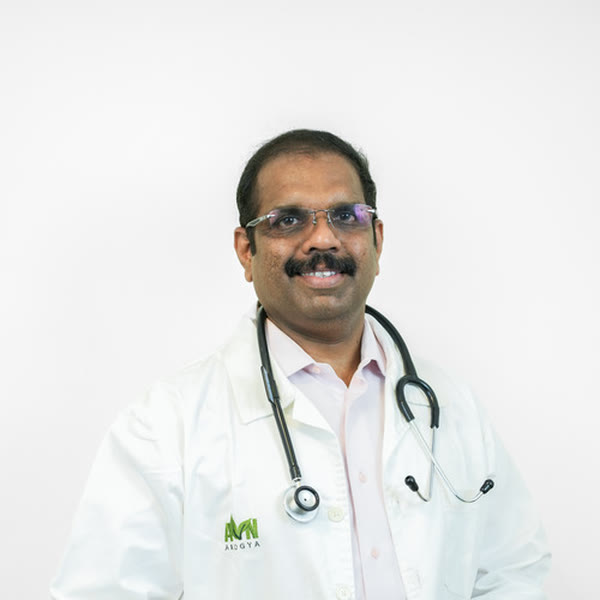
Dr.Biju Madhavan
Chief Consultant Physician
BAMS, MD (Ayurveda)
Dr. Sridevi Rajeev Warrier
Medical Director & Senior Consultant Physician
BAMS, (Gold Medalist)
Dr. Ramesh R. Varier
Senior Consultant Physician & Managing Director
BAMS, (Gold Medalist) & Guru under RAV, Clinical Hypnotherapist
Dr. Sreejith
Senior Physician
BAMS
Dr. Sreeja Biju
Senior Physician
BAMS,
Dr. Chippi
Senior - Physician
BAMS.,
Dr. Arya
Physician
BAMS
Dr. Unnikrishnan
Physician
BAMS, MD (Ayurveda)
Bone & Joint diseases — Overview & Ayurvedic Understanding
Musculoskeletal and rheumatic conditions are among the most common reasons people seek Ayurvedic care at AVN. Our approach recognises that each condition — whether degenerative (osteoarthritis), autoimmune (RA, PsA, AS), crystal-mediated (gout), or traumatic — requires a distinct protocol. Treatment integrates modern diagnosis with classical Ayurvedic therapies to reduce pain, preserve function, and slow disease progression.
Symptoms of Bone & Joint diseases
Joint pain and swelling
Stiffness, Redness, Restricted range of motion, Crepitus (grinding sensation), Difficulty with daily activities like walking, climbing stairs and using the joint or even moving.
Causes & Risk Factors for Bone & Joint diseases
Age-related joint degeneration, Trauma related damage, Obesity and mechanical overload
Occupational or sports-related repetitive stress
Genetic predisposition and Infections.
How We Diagnose Bone & Joint diseases
Senior physician clinical examination with detailed history, Review of imaging — X-ray, MRI, and blood markers (RA factor, Anti-CCP, ESR, CRP, uric acid, HLA-B27 etc) are used to diagnose the conditions. Deficiency of Vitamin D3 and B12 is also often investigated for. Baseline functional scoring using joint specific disability t=rating scales like (VAS, WOMAC, DAS28, BASDAI) are used to track baseline and progress objectively.
Bone & Joint diseases — Surgery vs Non-Surgical Ayurvedic Treatment
Why Non-Surgical Ayurvedic Treatment Works for Bone & Joint diseases
A significant majority of Degenerative joint disease or Osteo arthritis patients avoid surgery through structured Ayurvedic care — we see this consistently across knee OA, hip pain and Frozen shoulder. Ayurvedic therapies target joint inflammation, cartilage nutrition, and muscle-guarding more effectively than pain medication alone, and work safely alongside supplements like Vitamin D3 etc. Even patients who have tried Hyaluronic acid injections or Intra articular Steroids and still suffereing hav ebeen observed to experience significant improvement in functional abilities and pain relief without resorting to regular use of pain killers
When Surgery Is the Right Path
End-stage joint destruction with intractable pain despite supervised conservative care. Progressive functional decline despite 3-6 months of adequate therapy. Structural deformity requiring correction. We do not hesitate to recommend surgery in patients requiring surgery.
We maintain transparent referral relationships with leading orthopaedic and specialist surgeons.
Key Outcomes
>80% of knee and Hip OA patients avoid knee replacement through our 14-21-day IP programme
More than 95%+ of frozen shoulder patients avoid capsular release
Significant improvement is observed in functional scores (HAQ, WOMAC, VAS and QOL ) across conditions.
Treatment Pathways for Bone & Joint diseases
Outpatient (OP)
Many early and milder joint conditions can be managed with Ayurvedic medicines, diet, and guided home care after an initial consultation. More advanced, painful, or non-responding cases may benefit from visiting therapy or an inpatient programme, as your physician advises.
Book OP Appointment →Visiting Therapy
Daily therapy sessions without admission. Visit our centre and return home the same day.
Typical duration: 10-14 days for moderate conditions, normally severe patients are advised to undergo In-patient treatment.
Learn About Visiting Therapy →Inpatient Program
Intensive residential treatment with daily Panchakarma, physiotherapy, yoga, and dietary management.
Typical duration: A 14 -21 day inpatient programme is generally recommended for moderate to severe patients but it may extend slightly if the patient also has significant inflammation
Learn About IP Care →Ayurvedic Treatment Approach for Bone & Joint diseases
Care for musculoskeletal aconditions at AVN spans the full spectrum of acute to chronic joint disease due to degeneration with or without active inflammation. Each patient requires a distinctly different clinical approach. At AVN Arogya, there is no fixed protocol.
Every patient's programme is designed personally by the treating physician based on the specific stage of the disease, the current inflammatory state, the dosha vitiation pattern, constitutional type (Prakriti), and individual response to treatment. This physician-crafted approach — refined across four generations of AVN clinical practice — is what makes our care genuinely personalised rather than packaged. A degenerative presentation with an inflammatory override, for example, is never treated with strengthening therapies at the outset — anti-inflammatory measures are prioritised first, and rebuilding therapies are introduced only when appropriate.
Medicines, herbal combinations, and internal formulations are equally individualised: what works for one patient's presentation will not necessarily suit another's. Your programme will draw on the full range of classical Ayurvedic tools — Panchakarma (the five purification procedures), Kerala therapies, localised Vasti therapies, Upakarma (supportive procedures), and para-surgical interventions where indicated. The specific selection, sequence, and duration are decided by your physician.
See the 'Therapies that may be part of your programme' section below for examples of what this can include.
Ayurvedic Therapies for Bone & Joint diseases
These are examples of classical Ayurvedic therapies that may be selected for your programme depending on your condition, stage, and constitutional type. Your treating physician decides which therapies are appropriate — no two programmes are the same.
Upanaham
AdjunctiveA deeply penetrative hot herbal poultice application bound overnight to melt away chronic joint stiffness and deep pain.
Learn about this therapy →
Bandhanam
AdjunctiveA therapeutic herbal immobilization wrap used to stabilize weak or injured joints and accelerate deep ligament healing.
Learn about this therapy →
Lepanam
AdjunctiveAn application of a thick, targeted herbal paste over specific body areas to quickly draw out inflammation, pain, or skin impurities.
Learn about this therapy →
Navarakizhi
Kerala TherapyTherapeutic massage with boluses of cooked medicinal rice in warm medicated milk — one of the most restorative Kerala therapies.
Learn about this therapy →
Elakizhi
Kerala TherapyTherapeutic massage with boluses of fresh medicinal leaves warmed in medicated oil — excellent for inflammatory-painful joint conditions.
Learn about this therapy →
Ajavit kizhi
Kerala TherapyA specialized, traditional dry bolus therapy designed to relieve severe sciatic pain and deep nerve compression.
Learn about this therapy →
Tailadhara
Kerala TherapyA luxurious, highly therapeutic continuous pouring of warm medicated oils to nourish nerves, soothe anxiety, and deeply hydrate tissues.
Learn about this therapy →
Kadidhara
Kerala TherapyA continuous, rhythmic pouring of warm, fermented herbal grain liquid to combat deep-seated inflammation, fluid retention, and stiffness.
Learn about this therapy →
Erikkila kizhi
Kerala TherapyA targeted leaf-poultice massage leveraging the intense anti-arthritic power of Calotropis to dissolve severe heel and joint pain.
Learn about this therapy →
Your physician may also include Mutta kizhi, Manjal kizhi, Podi kizhi, Janu Vasti, Panchakarma, Virechanam, Vasti, Abhyangam, Swedanam, Udwarthanam or Pichu, depending on your presentation.
Treatment Outcomes for Bone & Joint diseases
Most osteoarthritis patients achieve 60-80% pain reduction and improved mobility within the 15 - 21-day inpatient programme.
Frozen shoulder patients significant improvement within 2-3 weeks and regain full range of motion within 2-3 months.
Knee and Hip replacement is often avoided entirely in Grade 1-3 osteoarthritis. and delayed or avoided for years in more severe cases.
Other non-surgical conditions like tennis elbow and calcaneal bursitis, plantar fasciitis, etc., are very well resolved with medicines and external therapies, which can be done at home.
Why AVN Arogya for Bone & Joint diseases
96 Years of Joint & Bone Expertise
Four generations of physicians specialising in musculoskeletal conditions. Our protocols for knee OA, frozen shoulder, gout, and hip disorders have been refined through decades of clinical practice with documented outcomes across 1,00,000+ patients.
Non-Surgical Joint Preservation
Structured Panchakarma and Kerala therapy protocols designed to reduce inflammation, restore mobility, and delay or avoid joint replacement surgery. Many patients advised surgery find adequate relief through our conservative approach.
Integrated Physiotherapy & Yoga
Every joint and bone treatment combines Ayurvedic therapies with structured physiotherapy and condition-appropriate yoga. This integrated approach addresses both the disease process and functional rehabilitation simultaneously.
NABH-Accredited & Insurance Covered
Inpatient treatment for musculoskeletal conditions is covered by 30+ insurance companies and TPAs. Our NABH accreditation ensures standardised protocols, systematic documentation, and cashless admission for empanelled insurers.
Bone & Joint diseases Treatment Cost & Programme Pricing
Inpatient treatment is INR 6,000-19,000 per day, all inclusive, depending on the room category chosen. Outpatient therapy is about INR 2,000-3,000 per day. More than 80% of cases overall and almost all mild and most moderately severe cases may need only medications and home based oil application or fomentation. which would cost on average about Rs 5000/ month. Cashless insurance offered by over 35 insurance partners accepted for in-patient care. Financing options through EMIs also available. The number of days you need depends on your own condition and is decided by the treating physician after assessment.
For condition-specific programme costs with all pathways (OPD, Visiting Therapy, Inpatient) and room-category breakdowns, open any condition above. For accommodation details and room pricing, see our inpatient rooms.
Why Choose AVN Arogya for Bone & Joint diseases?
If professional and honest recommendations and transparent approach is important to you, we are the ones to seek. We come with over 96 years of heritage in joint care — AVN Arogya began with musculoskeletal speciality since 1930.
Senior Ayurvedic physicians with experienced teams with deep clinical experience work alongside Physiotherapists and Yoga specialists along with Diet and Lifestyle modifications to help natural and holistic recovery., We are a 100-bed NABH-accredited hospital with in-house diagnostic lab, pharmacy, and physiotherapy and Yoga departments in addition to full fledged Ayurvedic treatments.
And why AVN Arogya at all
- Trust built on four generations and over 96 years of Ayurveda-based healing, evidenced by the patients we have treated and the testimonials they have given.
- Tamil Nadu's first Ayurvedic hospital to be NABH accredited — a testimony to our commitment to the quality of patient care.
- Doctors who give you a patient hearing, assess in detail using both modern diagnostics and holistic Ayurvedic methods, and make honest recommendations with options to suit your condition.
- Treatment protocols personalised to your situation, including the mode of treatment that fits it — outpatient, day care or inpatient.
- A holistic approach spanning diet, lifestyle, psychological support, pure Ayurvedic medicines and external applications, Panchakarma, Upakarma and Kerala speciality therapies, physiotherapy, rehabilitation and yoga where applicable.
- Safe and effective Ayurvedic medicines manufactured in-house and tested to international standards for heavy metals.
- Cashless inpatient treatment through tie-ups with 35 insurance companies and TPAs.
- Interest-free EMI on inpatient treatment, over 3 to 18 months, through our financing partners.
- Corporate tie-ups for screening camps, teleconsultations and inpatient treatment funded by corporate health programmes or insurance.
NABH accreditation covers the Vilachery hospital in Madurai. Cashless cover applies to inpatient treatment at the Vilachery hospital.
Patient Success Stories for Bone & Joint diseases
Real outcomes from real patients — watch their recovery journeys.
Kalaiselvi, Madurai
Osteoarthritis (knee)
Mrs. Kalaiselvi, a retired bank employee from Madurai, had years of osteoarthritis knee suffering and was advised surgery by allopathic doctors, but was determined to find a non-invasive alternative. At AVN Arogya she underwent holistic Ayurvedic care. According to the video she overcame her osteoarthritis without going under the knife. (Based on the video description.)
Surgery Avoided
Karthik, Sivagangai
Shoulder Nerve Pain
Mr. Karthik, from Sivagangai, struggled with shoulder pain caused by a nerve issue that disrupted his daily routine with intense discomfort. At AVN Arogya he received Ayurvedic care instead of the surgery reportedly suggested elsewhere. According to the video his shoulder nerve pain healed without surgery. (Based on the video description.)
Surgery Avoided
Aziz Mehdi, Visakhapatnam (Vizag)
Osteoarthritis of the Knee (advanced)
Mr. Aziz Mehdi, from Vizag, faced advanced osteoarthritis of the knee and was looking for alternatives to surgery. At AVN Arogya he underwent Ayurvedic treatment (Panchakarma and herbal care). According to the video he had a transformative recovery and avoided surgery. (Based on the video description.)
Surgery Avoided
Rajni Kejriwal, Odisha
Osteoarthritis (knee)
Mrs. Rajni Kejriwal, from Odisha, had severe knee pain, joint stiffness and limited mobility from osteoarthritis of the knee. At AVN Arogya she received Ayurvedic care (Panchakarma and herbal treatment). According to the video she found lasting relief without surgery. (Based on the video description.)
Surgery Avoided
Kaliyappan Iyyanar, USA (NRI; treated at Madurai)
Chronic Knee Pain (post-injury)
Mr. Kaliyappan Iyyanar, a US resident, lived with recurring left knee pain for over 20 years after an old accident, which worsened after playing volleyball. He came to AVN Arogya in Madurai for a holistic, non-surgical solution (Ayurvedic Panchakarma and herbal care). According to the video he found relief without surgery. (Based on the video description.)
Surgery Avoided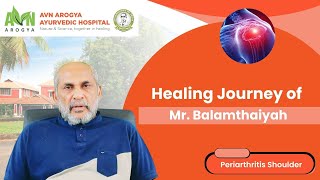
Balamthaiyah, Sivakasi
Periarthritis of the shoulder (frozen shoulder)
Mr. Balamthaiyah from Sivakasi came to AVN Arogya with periarthritis of the shoulder - stiffness, pain and restricted movement - after conventional treatments failed to give lasting relief. Under Dr. Bijju he underwent a 10-day personalised Ayurvedic plan of herbal oil massages and joint-mobilisation therapies. According to the video, by the end of treatment his shoulder pain had significantly reduced and he regained mobility, without steroids or surgery. (Based on the video description.)
Surgery AvoidedHave a Question About Bone & Joint diseases?
Tell us about your condition or ask anything about how we treat Bone & Joint diseases. Leave your details and our team will get back to you.
Start Your Bone & Joint diseases Treatment
Book a consultation to assess your condition and get a personalised treatment plan.
Ayurvedic & Medical Terms for Bone & Joint diseases
View Full Glossary →Ankylosing Spondylitis
A chronic inflammatory autoimmune disease primarily affecting the spine and sacroiliac joints, causing progressive stiffness and fusion. Often begins in late teens or twenties.
Arthritis
A broad term for joint inflammation characterised by pain, swelling, and reduced range of motion. Includes osteoarthritis (wear-and-tear), rheumatoid arthritis (autoimmune), gout, and over 100 other sub-types.
Frozen Shoulder
A condition where the shoulder capsule becomes inflamed and contracted, severely restricting movement. Progresses through freezing, frozen, and thawing stages over 1–3 years.
Gout
A form of inflammatory arthritis caused by uric-acid crystal deposition in joints, classically presenting as sudden severe pain and redness in the big toe.
Osteoarthritis
A degenerative joint disease characterised by cartilage breakdown leading to pain, stiffness, and reduced mobility. Most commonly affects the knee, hip, and spine.
Psoriatic Arthritis
An autoimmune arthritis associated with psoriasis, affecting joints, tendons (enthesitis), and sometimes the spine. Can cause nail changes and dactylitis (sausage digits).
Rheumatoid Arthritis
A chronic autoimmune disease where the immune system attacks the synovial lining of joints, causing inflammation, pain, swelling, and progressive joint destruction. Commonly affects the hands, wrists, and feet.
Anti-inflammatory
Any substance that reduces inflammation -- the body's response characterised by redness, swelling, heat, and pain. Both conventional drugs (like NSAIDs) and Ayurvedic formulations (like Dhanyamla) have anti-inflammatory properties.
Bursitis
Inflammation of a bursa — a small fluid-filled cushioning sac near a joint — causing pain and swelling.
Degeneration
Gradual deterioration of tissues due to ageing or disease. In musculoskeletal medicine, refers to progressive loss of cartilage, bone density, and disc height.