
Many people hear "Panchakarma" and picture a week of massages, or a harsh detox. It is neither. Panchakarma is Ayurveda's most thorough treatment: five classical procedures that clear accumulated toxins from the body, with careful preparation before and guided recovery after. Chosen by a physician for your condition, it helps the body's own healing do its work, and patients can expect to feel lighter, sleep better and see measurable improvement in the problem they came with.
What does Panchakarma mean in Ayurveda?
"Pancha" means five and "karma" means action. The five procedures are Vamanam, Virechanam, Vasti, Nasyam and Raktamokshana, and they are described in the classical Ayurvedic texts.
How does Panchakarma help the body heal?
The body has a powerful, built-in ability to heal itself, and Ayurveda's medicines and procedures work to strengthen it, in a different way from modern drugs. In long-standing illness, Ayurveda sees accumulated toxins as one of the things holding that healing back. Panchakarma clears them out of the body by the route best suited to your problem, and then helps the body rebuild.
Painkillers and anti-inflammatory tablets quieten symptoms. Panchakarma works on the body that is producing them. That is also why two people with "the same" diagnosis may be given quite different courses: every programme is designed personally by the treating physician.
The five Panchakarma procedures, in plain words
Vamanam — therapeutic emesis
Vamanam is supervised, controlled vomiting after careful preparation, which clears toxins from the stomach and the airways. It is a targeted treatment, not a general "detox", used for chronic bronchial asthma, some long-standing skin conditions, and stubborn allergic rhinitis and sinusitis. At AVN Arogya it is done mostly in the inpatient unit, with close monitoring before, during and after, and it is not uncomfortable when done correctly by skilled physicians.
Virechanam — therapeutic purgation
Virechanam uses medicines to clear the bowel in a controlled way, cleansing the intestine and the liver and gallbladder region. It is one of the most widely useful procedures, used for chronic skin conditions such as psoriasis and eczema, rheumatic and autoimmune disorders, and liver conditions. It can be done in the inpatient or outpatient unit. Most of our patients feel lighter and clearer within a day or two of completing it.
Vasti — medicated enema
Vasti is a medicated enema made from herbal decoctions (Kashaya Vasti) or medicated oils (Anuvasana Vasti). It is the most versatile of the five procedures and the main one for most spine, joint and nerve problems. It is given as a course whose length your physician sets, and it is always done alternately (except in some cases, as per the Doctor's discretion). It is comfortable and well tolerated when given by trained therapists.
Nasyam — nasal therapy
Nasyam is the administration of medicated oils or herbal preparations through the nose. Classical Ayurveda regards the nose as the gateway to the head, so Nasyam is central to treating conditions above the collarbone: migraine and chronic headache, sinusitis and allergic rhinitis, cervical spondylosis, facial palsy and most neurological conditions.
Raktamokshana — bloodletting
Raktamokshana is the classical bloodletting procedure. Whether it has any place in your care is a decision for your physician.
Preparation and aftercare: the parts people don't hear about
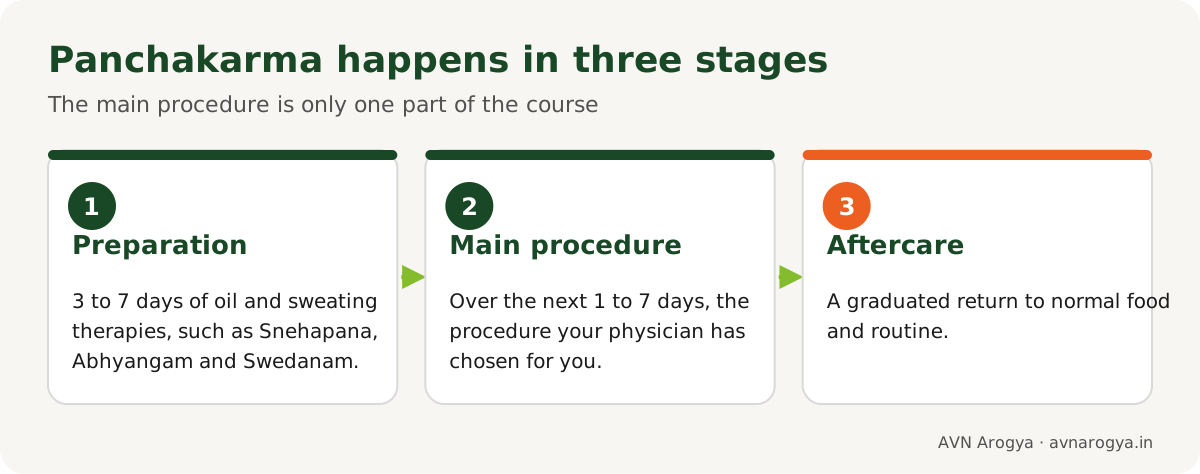
The main procedure is only one stage. Panchakarma at AVN Arogya is always preceded by preparation (Purvakarma) and followed by post-therapy care (Paschatkarma).
Preparation usually takes 3 to 7 days of oil therapies and sweating (sudation) therapies. These may include:
- Snehapana — warm medicated ghee or oil usually taken on an empty stomach in gradually increasing amounts, which loosens deep-seated toxins so they can be cleared. A temporary loss of appetite, a heavy stomach and ghee-flavoured burps are expected, followed by softer skin and a feeling of lightness once it is digested.
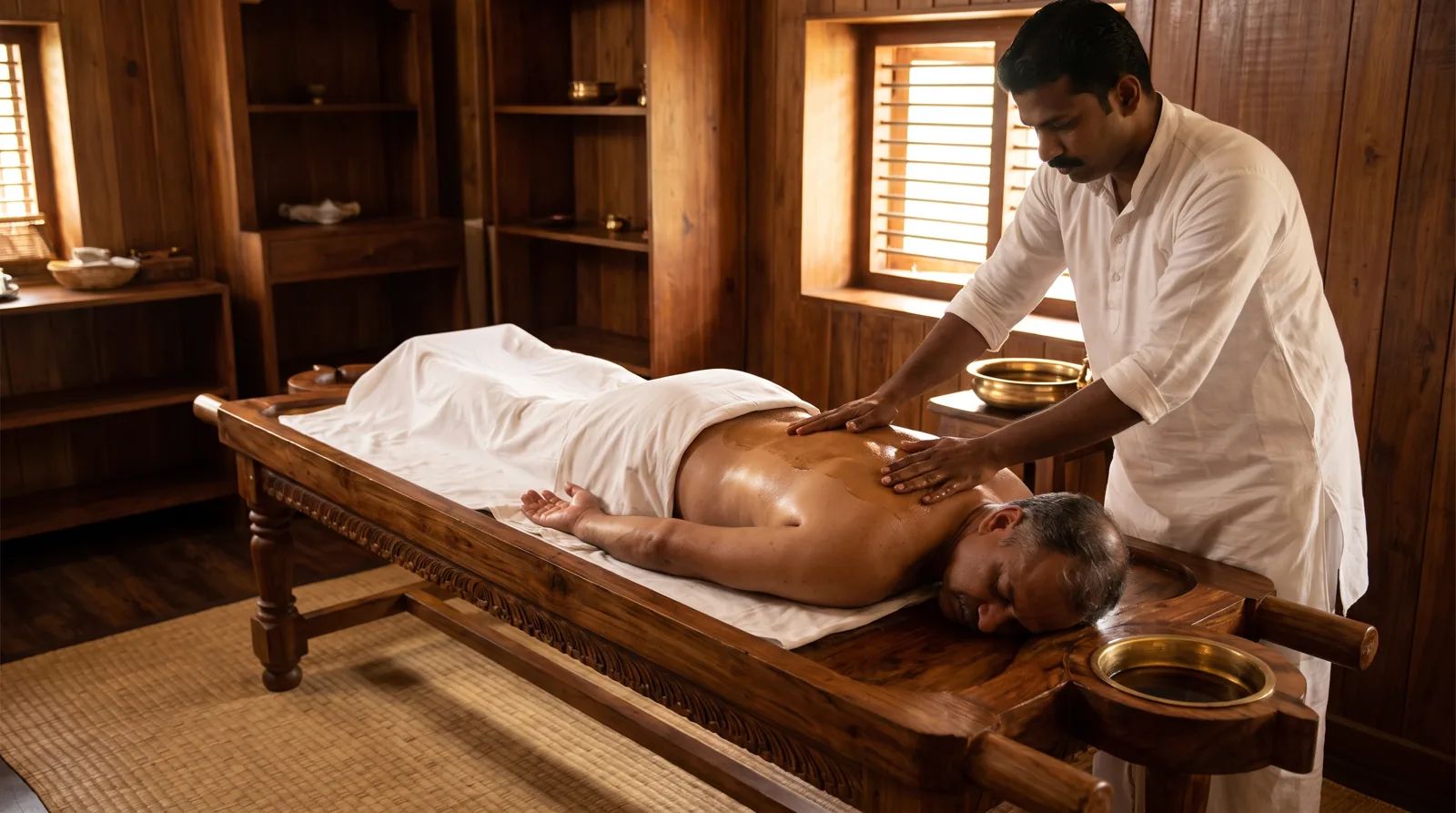
- Abhyangam — a full-body massage with warm medicated oil chosen for your condition.
- Swedanam — a herbal steam bath that induces sweating.
The main procedure follows over the next 1 to 7 days, and then a graduated return to normal food and routine.
Who is Panchakarma for?
Panchakarma is for illness that is chronic and deep-rooted, and for periodic preventive care. Your physician decides, after examining you. Conditions where it may be part of the programme include:
- rheumatic and joint diseases, such as rheumatoid arthritis, ankylosing spondylitis, psoriatic arthritis and frozen shoulder
- autoimmune disorders, such as lupus
- chronic skin conditions
- neurological conditions, such as multiple sclerosis and peripheral neuropathy
- digestive problems, such as IBS and acid reflux
- PCOS, menstrual disorders and fertility
- periodic preventive care
For chronic and complex conditions, our structured inpatient programmes, built around Panchakarma, deliver the most effective Ayurvedic outcomes. In autoimmune conditions, for example, short Vasti courses bring down inflammatory markers and help prevent relapses.
When it is not advised, or not yet
Panchakarma is not done during an acute fever, in severe weakness or wasting, in advanced heart or kidney failure, or in pregnancy. Children under 10 need a specific paediatric protocol. If there is severe active inflammation, preparatory treatment comes first. Each procedure also has its own exclusions: Vamanam, for example, is not used after recent surgery, in severe high blood pressure, heart conditions, pregnancy or the elderly.
This is why Panchakarma cannot be chosen from a menu.
Not a spa package
The word "Panchakarma" is sometimes used for wellness packages made up mostly of massages. At AVN Arogya, Panchakarma is never given as a standalone cosmetic wellness package. It is a prescribed medical sequence matched to your condition: therapies tailor made by a physician and given daily by trained therapists.
Panchakarma treatment at AVN Arogya
Treatment starts with an assessment by a physician who gives you a patient hearing. An outpatient (OP) consultation assesses your condition and advises you; it is not itself treatment. The physician takes a detailed history, does an Ayurvedic assessment and reviews your existing scans and reports, then gives you a written plan.
If Panchakarma is advised, it is usually part of an inpatient programme at our Madurai hospital, which has a dedicated Panchakarma wing with more than 20 therapy rooms. Each programme is designed personally by your physician, an approach refined across four generations and more than 96 years of AVN practice. A 7-day introductory programme suits milder conditions or a follow-up course; 14 days is the minimum for a full Panchakarma course, and your physician sets the exact length from your condition and how you respond.
AVN Arogya works alongside conventional medicine, not in place of it. Please do not stop any prescribed medicine to start Panchakarma; bring a list of everything you take so the physician can plan around it.
Frequently asked questions
What is Panchakarma treatment, in one line?
Five classical Ayurvedic procedures, with preparation before and guided recovery after, that clear accumulated toxins from the body and help it heal.
How many days does Panchakarma take?
The core cycle is 3 to 7 days of preparation, 1 to 7 days for the main procedures, then a gradual return to normal food and routine. Inpatient programmes at AVN Arogya range from a 7-day introductory course to 14 days or longer, set by your physician.
Is Panchakarma painful?
Vasti is generally comfortable and well tolerated when given by trained therapists. Vamanam is not uncomfortable when done correctly by skilled physicians. The preparation phase can cause a heavy stomach and reduced appetite for a short time.
Can I have Panchakarma at home or as an outpatient?
The eliminative procedures need supervision. At AVN Arogya, Vamanam is mostly carried out in the inpatient unit, while Virechanam can be done in the inpatient or outpatient unit. Your physician will tell you which parts of your care can be given as an outpatient.
Can a healthy person have Panchakarma?
Yes. Periodic preventive care is one of its uses. It still begins with an assessment, because the same exclusions apply.
If you live with a long-standing condition and want treatment that works on the body itself, not only the symptoms, talk to physicians who have practised Panchakarma for four generations. Read more about Panchakarma at AVN Arogya, or book a consultation to find out whether it is right for you.