

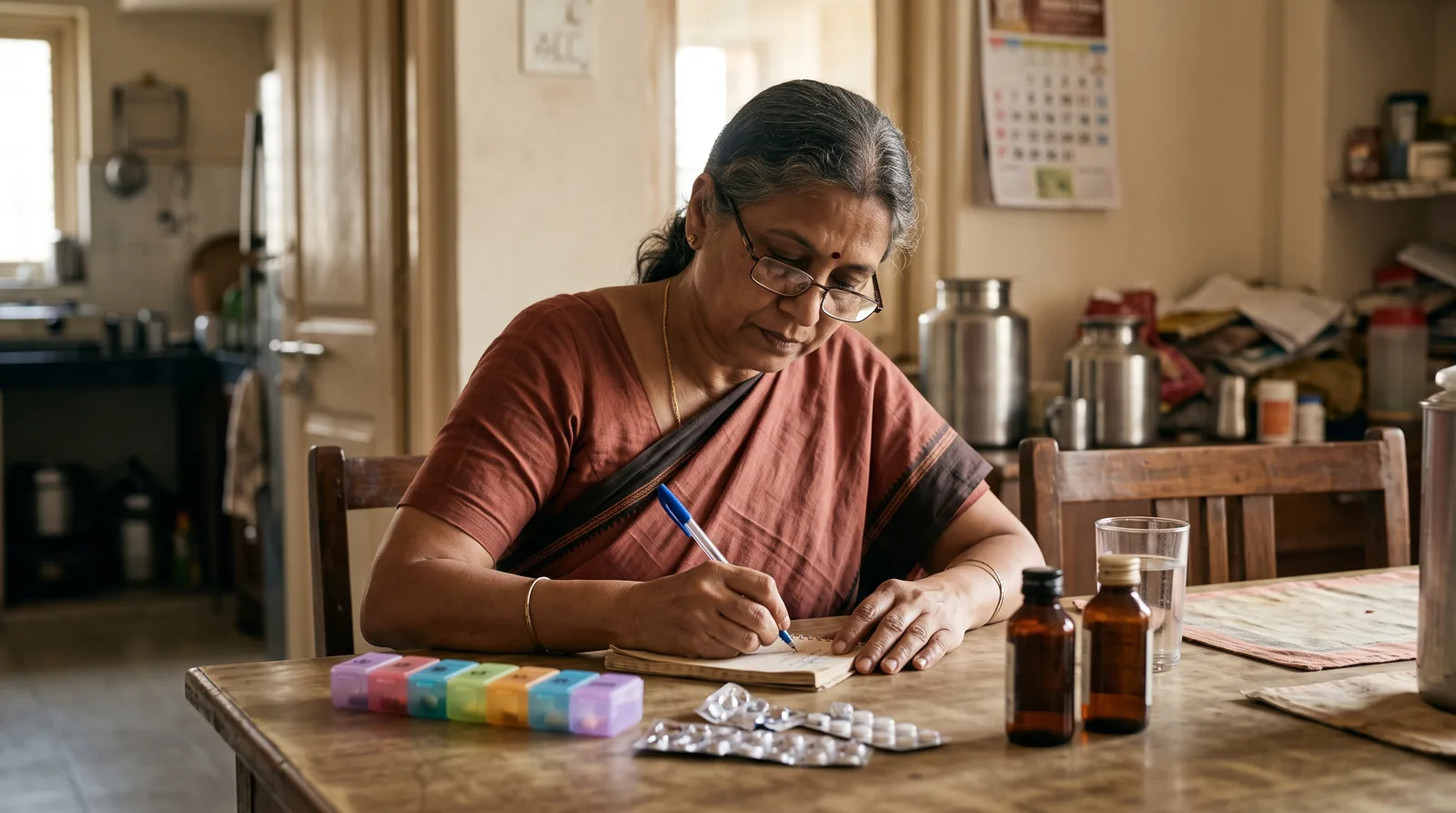
It is one of the first questions our patients ask, usually with a worry behind it: will the two clash, or will I have to give up my tablets? For most people, Ayurvedic and allopathic medicines can be taken together safely. At AVN Arogya, our physicians ask about every medicine you take and advise you which ones to continue. They review your complete medical history before prescribing, and monitor your progress closely. The one firm rule: never stop or change a prescribed medicine yourself.
Can Ayurvedic and allopathic medicines be taken together?
Many people who come to Ayurveda are already on tablets for blood pressure, diabetes, thyroid, pain or a heart condition. Some worry that the two systems will "clash". Others quietly stop their regular tablets, believing Ayurvedic treatment will replace them. Both reactions are understandable, and both can be avoided.
Ayurvedic care at AVN Arogya works alongside your conventional treatment, not in place of it. Ayurveda's medicines and therapies work differently from modern drugs: they strengthen the body's own healing, adding a real extra dimension to recovery rather than duplicating what your tablets do. Many of our patients come to us for conditions where they were advised surgery or lifelong medication, so planning Ayurvedic treatment around existing medicines is everyday work for our physicians.
Do Ayurvedic medicines interact with allopathic medicines?
They can, and that is no reason for alarm. Herbs are biologically active: that is why they help, and also why they can interact with other medicines. Some herbal products can change how strongly a prescription medicine works, either by adding to its effect or by changing how the body processes it.
Combinations that need particular care include:
- Blood thinners (anticoagulants and antiplatelet medicines). Some herbs can add to their effect and raise the risk of bleeding.
- Diabetes medicines. Some herbs can lower blood sugar further, so the combination could push sugar too low.
- Blood-pressure medicines. Some herbs can raise or lower blood pressure, changing how well your treatment controls it.
- Medicines with a narrow safe range, such as some heart, epilepsy, transplant and cancer medicines, where small changes in blood levels matter.
None of this means you cannot have Ayurvedic treatment if you take these medicines. It means your doctors need the full picture, so they can choose suitable medicines, doses and timing. That is exactly what a proper assessment is for.
Should I stop my allopathic medicines when I start Ayurveda?
No. This is the most important point in this article. Do not stop, reduce or skip any medicine your doctor has prescribed because you have started Ayurvedic treatment. Suddenly stopping some medicines, such as those for blood pressure, heart rhythm, epilepsy, thyroid or diabetes, or steroids, can be dangerous.
If, over time, your condition changes and a dose may need adjusting, that decision belongs to the doctor who prescribed it, with up-to-date tests in front of them.
How our physicians plan Ayurvedic treatment around your medicines
Treatment starts with an assessment by a physician who gives you a patient hearing. An outpatient (OP) consultation assesses your condition and advises you; it is not itself treatment. The physician takes a detailed history, does an Ayurvedic assessment and reviews your existing MRI, X-ray and blood reports. Your complete medical history and current medicines are reviewed before anything is prescribed.
You then receive a written treatment plan with any recommended therapies and medicines, diet guidance and a follow-up schedule. Your progress is monitored, and if you have any unexpected reaction, the team adjusts the plan straight away. AVN Arogya is complementary to conventional care, with clear referral pathways: if something in your history needs another specialist's input, your physician will say so.
Taking Ayurvedic and allopathic medicines together: a simple checklist
- Make one complete list of everything you take: prescription tablets and injections, over-the-counter medicines, vitamins, supplements, Ayurvedic or Siddha medicines, kashayams, home remedies and powders. Write the name, the dose and when you take it.
- Bring the list to every appointment, Ayurvedic and allopathic. If you are being admitted at AVN Arogya, a current medication list is on the list of things to bring.
- Tell your allopathic doctor about any Ayurvedic medicine you start, and tell your Ayurvedic physician about any new prescription.
- Ask about timing. Ask whether your particular medicines should be taken at different times of day.
- Keep up your usual checks. If you monitor blood pressure, blood sugar or other tests, carry on, and ask whether any extra checks are needed when something new is added.
- Before any planned surgery, tell the surgical team about every herbal product you take.
- Buy medicines only from a licensed source, prescribed for you, with a clear label. Some Ayurvedic products sold without proper quality control have been found to contain lead, mercury or arsenic.
How pure are AVN's Ayurvedic medicines?
Where a medicine comes from matters. AVN has made its own Ayurvedic medicines since 1930, and today they are made in an in-house, GMP-certified (Good Manufacturing Practice) factory. They are tested to international standards for heavy metals. The medicines your physician prescribes are dispensed from our own pharmacy.
Warning signs: see a doctor urgently if
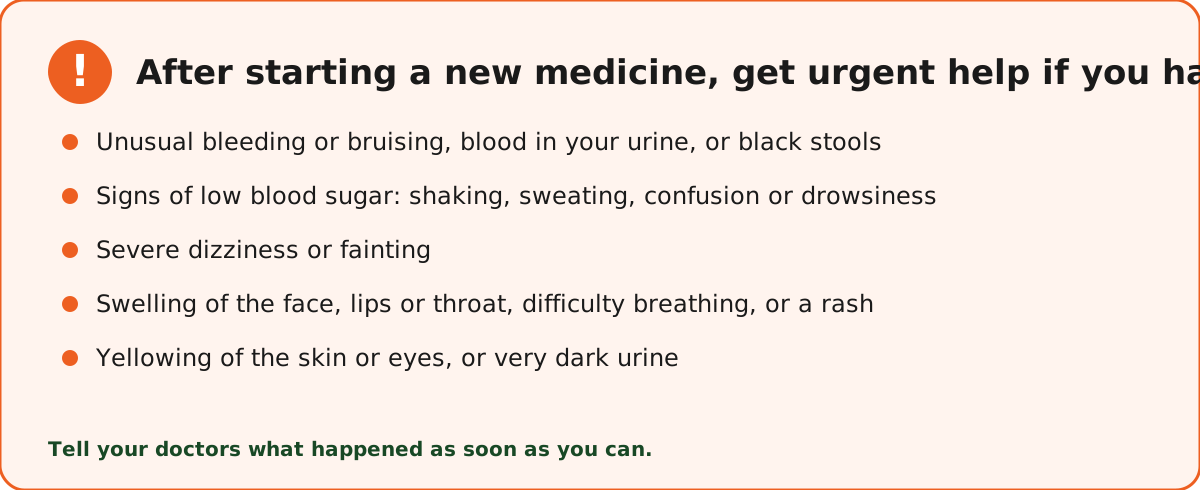
After starting any new medicine, herbal or otherwise, get urgent medical help if you have:
- unusual bleeding or bruising, blood in your urine, or black, tarry stools
- signs of low blood sugar: shaking, sweating, confusion or drowsiness
- severe dizziness or fainting
- swelling of the face, lips or throat, difficulty breathing, or a widespread rash
- yellowing of the skin or eyes, or very dark urine
Tell your doctors what happened as soon as you can.
Frequently asked questions
Should I stop my allopathic medicines when I start Ayurvedic treatment?
No. Never stop or change a prescribed medicine on your own. Any change is a decision for the doctor who prescribed it.
Is it safe to take Ayurvedic and English medicines together?
For most people, yes. The risk comes from combinations nobody has reviewed, which is why our physicians ask about every medicine you take and advise you which ones to continue.
How much gap should I keep between Ayurvedic and allopathic medicines?
Ask your physician. The answer depends on which medicines are involved, so it is part of your written plan rather than a general rule.
Are Ayurvedic medicines free of side effects because they are natural?
Not automatically. Herbal medicines are active substances and can have side effects and interactions. That is why they should be prescribed after an assessment and taken as directed. Reactions to our medicines are uncommon and usually mild, typically a little digestive adjustment in the first few days, and your physician watches for them.
Can I consult AVN Arogya without travelling?
Yes. Phone consultation is available for all conditions; video consultation is available for spine, avascular necrosis, rheumatology, and bone and joint conditions.
You do not have to choose between your current treatment and Ayurveda. Talk to physicians who plan the two together every day. See outpatient consultation at AVN Arogya, or book a consultation and bring your current medicine list with you.