

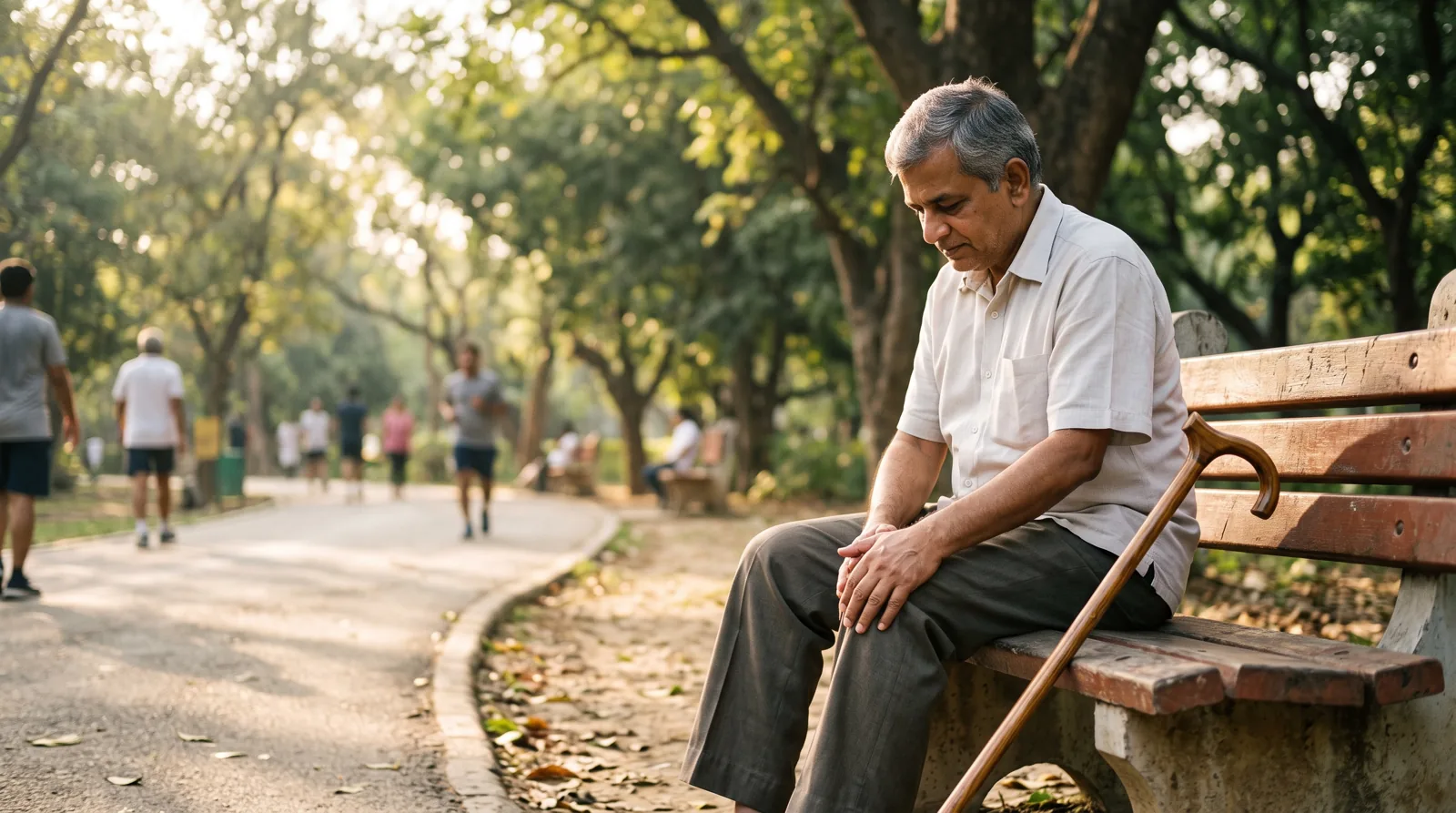
If you have knee osteoarthritis, you have probably been told it is wear and tear: take painkillers, and when they stop working, have the knee replaced. There is more to it than that. Cartilage that has worn away does not grow back, so no honest doctor promises a cure. But the pain, stiffness, swelling and shrinking walking distance it causes can improve a great deal, and many of our patients who were advised knee replacement have avoided or deferred it.
Is knee osteoarthritis just wear and tear?
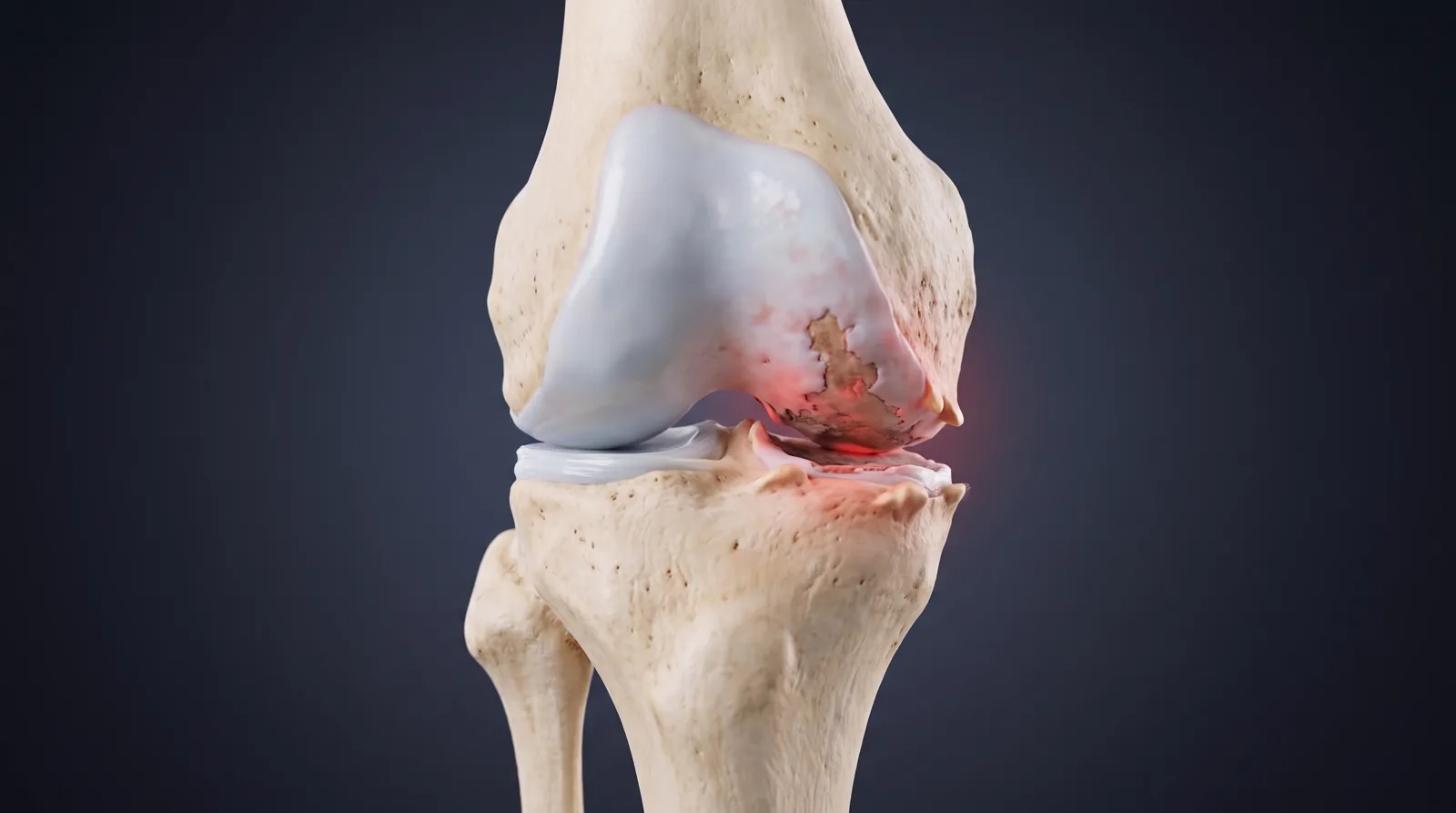
Knee osteoarthritis (OA) is the gradual breakdown of cartilage, the smooth, rubbery tissue that covers the ends of the bones in the joint. As it thins, the gap between the bones (the joint space) narrows. Common signs are:
- pain on stairs and after resting
- morning stiffness that eases within about 30 minutes
- swelling, and a grinding feeling (crepitus) when the knee moves
- difficulty squatting or sitting cross-legged
- a walking distance that slowly gets shorter
"Wear and tear" sounds hopeless. It is not. Knee OA progresses at very different speeds in different people, and many continue to lead active, independent lives for years, especially when it is treated early and well. The body can still settle inflammation, strengthen the muscles that carry the knee and recover a great deal of function, and Ayurveda works to strengthen that healing.
The four stages of knee osteoarthritis
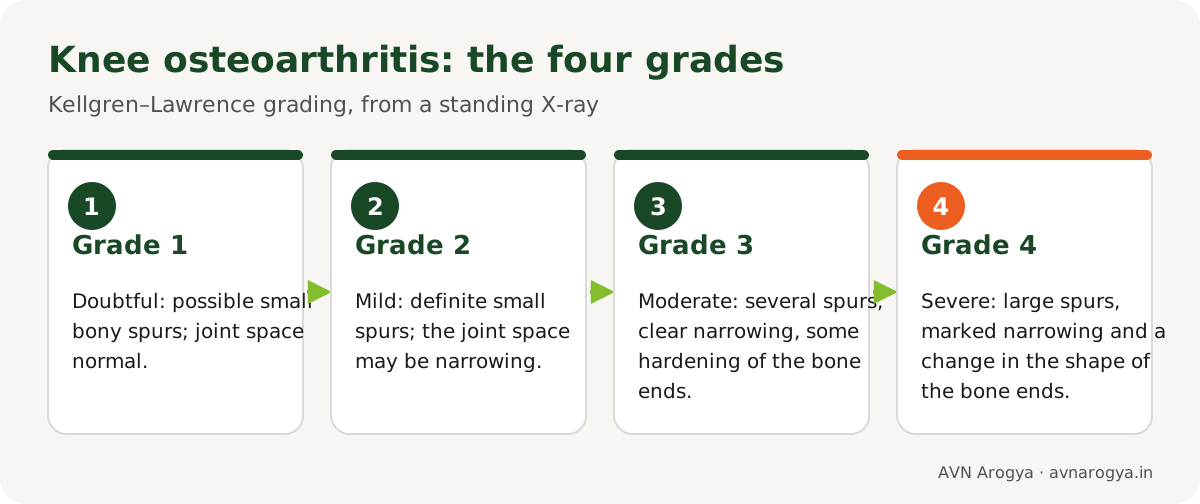
Doctors grade OA on a standing X-ray using the Kellgren–Lawrence scale. It runs from grade 0 (a normal knee) to grade 4, which is why people speak of "four stages".
- Grade 1 — doubtful — What the X-ray shows: Possible small bony spurs (osteophytes); joint space normal or only doubtfully narrowed
- Grade 2 — mild — What the X-ray shows: Definite small bony spurs; the joint space may be narrowing
- Grade 3 — moderate — What the X-ray shows: Several bony spurs, clear narrowing of the joint space, some hardening of the bone ends (sclerosis)
- Grade 4 — severe — What the X-ray shows: Large bony spurs, marked narrowing, severe sclerosis and visible change in the shape of the bone ends
The X-ray grade is not the whole story
Two people with the same grade can have very different pain and function. How you walk, sleep and manage stairs matters as much as the picture, and that is what treatment can change.
What can Ayurveda do for knee osteoarthritis?
Here is the honest position first. Ayurvedic treatment does not rebuild lost cartilage, and it will not turn a grade 4 knee back into a grade 1 knee.
What it does is work on what actually limits your life. Our Ayurvedic therapies, internal medicines and targeted physiotherapy work together to reduce inflammation and restore joint function, and with weight management they help slow the progression of the condition. They ease joint inflammation and the protective muscle tightening around a painful knee more effectively than pain medication alone. Even patients still suffering after hyaluronic acid or steroid injections have improved significantly with us, without relying on regular painkillers.
A significant majority of the osteoarthritis patients we treat avoid surgery, and we see this consistently in knee OA.
What to expect at each stage
- Grades 1 and 2: outcomes are excellent, and our patients typically regain near-normal function.
- Grade 3: significant relief, and knee replacement is often avoided entirely or put off.
- Grade 4: the aim is pain control and better mobility; in many of our patients with severe knees, replacement is delayed for years, and some avoid it.
Swelling usually comes down within the first one to two weeks, and pain eases markedly over two to three weeks. Progress is measured, not assumed: pain and function scores (VAS and WOMAC) are recorded at the start and checked again before discharge. You can watch our patients' stories in their own words.
Knee OA treatment at AVN Arogya, step by step
Treatment starts with an assessment by a physician who gives you a patient hearing. An outpatient consultation assesses your knee and advises you; it is not itself treatment. It includes a clinical examination, weight-bearing X-rays and, if needed, an MRI. Your physician then recommends the pathway, from medicines and guided home care to visiting therapy or an inpatient programme; for moderate to severe knees it is usually a 14–21 day inpatient programme.
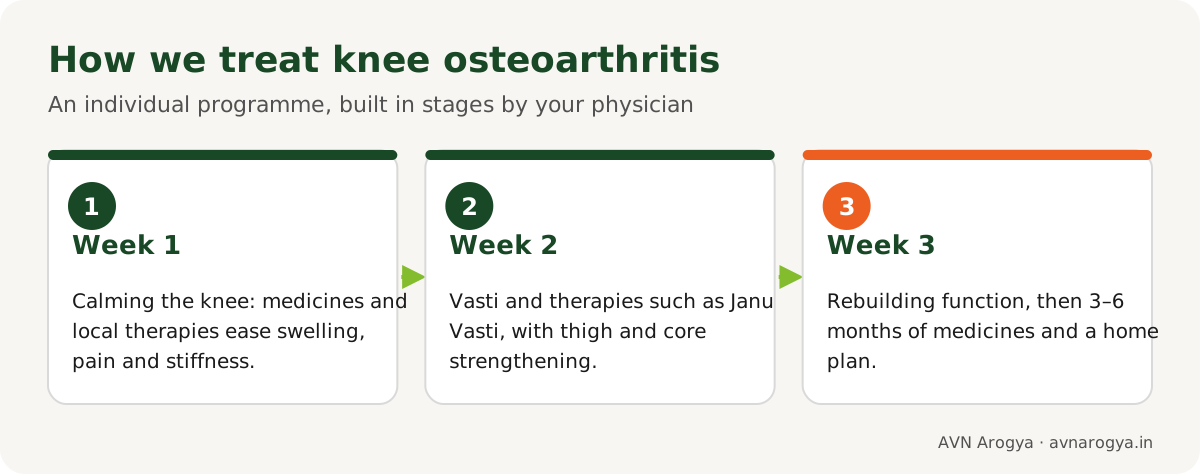
There is no fixed package: every programme is designed personally by your physician, an approach refined across four generations and more than 96 years of AVN practice. It moves through deliberate stages:
- Calming the knee (week 1). Internal anti-inflammatory medicines and local therapies reduce swelling, pain and stiffness, with gentle physiotherapy and yoga. Strengthening is not forced on an inflamed joint.
- Deeper treatment and strengthening (week 2). Vasti, the medicated enema that is the cornerstone Ayurvedic treatment for degenerative joint conditions, is introduced to improve joint lubrication, alongside thigh-muscle and core strengthening and supported yoga.
- Rebuilding function (week 3). Intensive Ayurvedic strengthening therapies for mobility and strength, then a check of knee flexibility, walking endurance, pain and stability.
Your physician chooses from classical therapies such as Janu Vasti, in which warm medicated oil is held over the knee to reduce inflammation and relieve pain; Elakizhi, a massage with warm boluses of medicinal leaves, well suited to painful, inflamed joints; Navarakizhi, one of the most restorative Kerala therapies; and Upanaham, a warm herbal poultice bound overnight to ease chronic stiffness and deep pain.
You go home with a 3–6 month course of oral medicines, a home physiotherapy and yoga plan, advice on protecting the joint, diet and weight guidance, and a follow-up schedule. Our medicines are made in-house and tested to international standards for heavy metals.
Will the relief last?
Knee OA is a long-term condition, so the honest word is control, not cure. With the inflammation calmed, the muscles rebuilt and your home exercises kept up, the benefit is sustained, and most of our patients return to pain-free daily activities. Keeping to your diet, exercise and follow-up plan reduces the chance of symptoms returning.
When is knee replacement the right choice?
Knee replacement is a good operation for the right person at the right time. A grade 4 knee with severe pain and disability, where supervised non-surgical care has not worked, may need a total knee replacement. So may a knee that keeps declining despite 3–6 months of adequate treatment, or one with a deformity that needs correcting. We do not hesitate to recommend surgery when it is needed: we refer you to senior orthopaedic surgeons and can support your recovery afterwards. AVN Arogya works alongside conventional medicine, not in place of it.
Warning signs: see a doctor urgently if
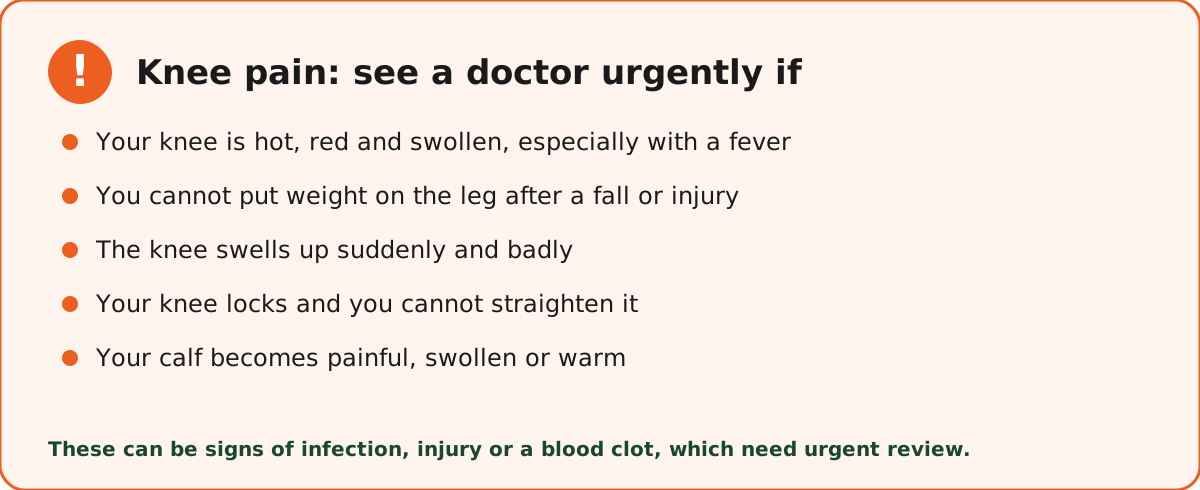
- your knee is hot, red and swollen, especially with a fever, as this can be an infection
- you cannot put weight on the leg after a fall or injury
- the knee swells up suddenly and badly
- your knee locks and you cannot straighten it
- your calf becomes painful, swollen or warm, as this can be a blood clot
Frequently asked questions
Can osteoarthritis be cured permanently?
Lost cartilage does not grow back, so no treatment can honestly promise that. What can last is the relief: in the majority of the patients we treat, pain eases and walking improves, and the gains hold with exercise, weight care and follow-up.
What are the 4 stages of osteoarthritis?
Grade 1 (doubtful), grade 2 (mild), grade 3 (moderate) and grade 4 (severe), based on bony spurs and narrowing of the joint space on an X-ray.
What is the best treatment for knee osteoarthritis?
There is no single best treatment for everyone. Exercise, especially thigh-muscle strengthening, and weight loss if you are overweight are the foundations every guideline agrees on. Our programme builds on them with Ayurvedic therapies and medicines that reduce inflammation and restore function.
My surgeon has advised knee replacement. Can I avoid it?
Often, yes. Many of our patients who were advised knee replacement have avoided or deferred it, particularly at grades 1 to 3. If your joint damage is advanced and surgery is the better option, we will tell you so.
If you have been told to live with knee pain, or that replacement is the only answer, get a second view from physicians who have treated joints for four generations. Read about Ayurvedic treatment for knee osteoarthritis at AVN Arogya, or book a consultation. You can send your X-rays and reports in advance.