


Most people with cervical spondylosis are told one of two things: "it is age, learn to live with it", or "if the painkillers stop working, you will need surgery". At AVN Arogya we see a third path every day. The age-related changes on your scan do not simply disappear, but the pain, stiffness, giddiness and arm symptoms they cause can settle — and in the majority of the patients we treat, they settle without an operation and stay settled with the right care.
Do you really have to live with cervical spondylosis?
Cervical spondylosis is wear in the discs and small joints of the neck: the discs lose water, the joints thicken, and small bony spurs form. Modern medicine rightly points out that these changes come with age. What it often leaves out is how much the body can still do about them.
The body has a powerful, built-in capacity to heal. Inflammation can settle, irritated nerves can recover, tired muscles can be rebuilt, and tissues can be nourished back towards health. Painkillers and muscle relaxants quieten the symptoms while that process is left to chance. Ayurveda works on the process itself.
Progression is not inevitable. People with very similar scans live very different lives — and the difference is usually what happens to the inflammation, the nerves and the supporting muscles, not the bone spurs alone.
How Ayurvedic treatment for cervical spondylosis works differently
Most patients come to us in pain, often after months of treatment that did not last, or with surgery already recommended. Our programme brings Ayurvedic spinal therapies, targeted medicines, physiotherapy and yoga together, guided by modern diagnostics, and it usually avoids surgery even in severe conditions.
The difference is in the order and the aim. Painkillers quieten the pain; our treatment works on what is producing it. It aims to:
- calm the inflammation first, before any strengthening is attempted
- nourish and lubricate the dried, degenerating tissues of the neck with medicated oils and internal medicines
- relieve nerve irritation, so arm pain, numbness and tingling can recede
- rebuild the muscles that hold the neck, so the improvement lasts
Cervical spondylosis treatment at AVN Arogya, step by step
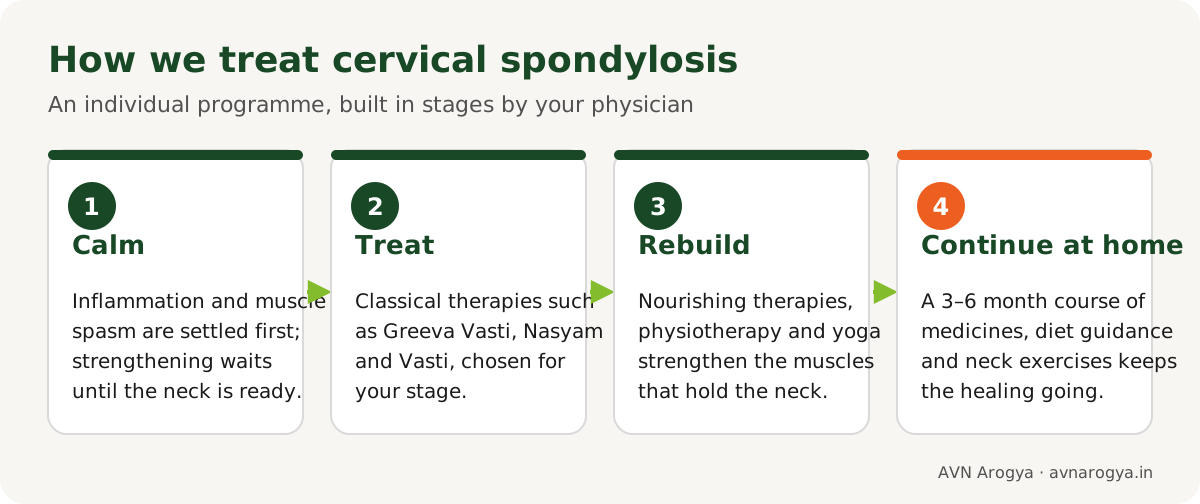
There is no fixed package. Every programme is designed personally by your physician around the stage of your condition, how inflamed the neck is, your constitution and how you respond — an approach refined across four generations of AVN practice. It moves through deliberate stages:
- Calming the acute phase. If there is severe inflammation or muscle spasm, strengthening is avoided at the start; anti-inflammatory and pain-relieving treatments come first.
- The classical therapies. Once the inflammation is under control, the full Ayurvedic toolkit is used as your physician decides — typically over 10 to 14 days as an inpatient. This can include Greeva Vasti, our signature neck therapy, in which warm medicated oil is held over the cervical spine; Nasyam, medication given through the nose, central to treating conditions of the neck and head; Vasti, a medicated enema and the most versatile of the Panchakarma procedures; and warm herbal bolus massages that ease pain, stiffness and swelling.
- Rebuilding and rejuvenation. As the spine settles, nourishing and rebuilding therapies are introduced to halt progression, support disc rehydration and strengthen the muscles alongside the neck. Physiotherapy and yoga are built into the programme, not added as an afterthought.
You go home with a 3–6 month course of oral medicines, diet guidance, posture and lifestyle advice and targeted neck exercises, so the healing continues after discharge.
AVN was the first to develop an Ayurvedic medicine specifically for cervical spinal disorders. Our own formulation, Cervilon, is designed to relieve nerve irritation and support the spine, and is made in our in-house pharmacy, tested to international standards for heavy metals.
How soon will my neck pain improve?
Our patients typically describe the neck pain easing first, then movement returning. Arm numbness improves progressively over about 4 to 8 weeks. Progress is measured, not assumed: pain scores, neck movement and nerve signs such as grip and sensation are checked through treatment.
Many of our patients came to us after other treatments gave no lasting result — and went home with their pain reduced and their movement restored, without surgery. You can watch their stories in their own words.
Is relief from cervical spondylosis permanent?
"Permanent" really asks whether the pain will come back. With treatment that has calmed the inflammation, nourished the tissues and rebuilt the supporting muscles, and with good neck habits afterwards, the majority of our patients stay well for the long term. Flare-ups can still happen after strain or long hours bent over a screen, but they tend to be milder and shorter, and they respond to treatment.
What we will not tell you is that your scan will look young again. The spurs may remain. Our aim — and our experience — is a neck that no longer controls your life.
When is surgery needed for cervical spondylosis?
We say this plainly because it matters. If the spinal cord itself is being squeezed (cervical myelopathy) — shown by clumsy hands, dropping things, difficulty with buttons or writing, or unsteady walking — you need urgent evaluation, and sometimes surgery. Our physicians do a thorough neurological assessment, and if surgery is necessary we refer you to the right specialist without delay. For everyone else, surgery is not the only road, and it is rarely the first.
Warning signs: see a doctor urgently if
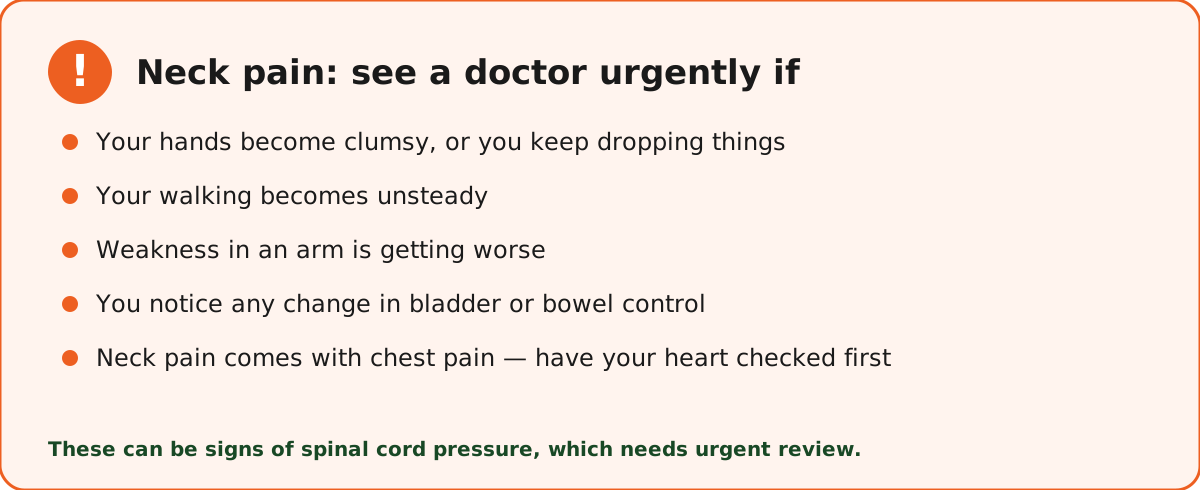
- your hands become clumsy, or you keep dropping things
- your walking becomes unsteady
- weakness in an arm is getting worse
- you notice any change in bladder or bowel control
- neck pain comes with chest pain — have your heart checked first
Frequently asked questions
Can cervical spondylosis be cured permanently?
The bony changes of age do not vanish, so no honest doctor promises a "cure". But the pain, stiffness and nerve symptoms they cause can settle, and in the majority of the patients we treat they settle without surgery and stay under control with the right follow-up.
Will I have to live with neck pain forever?
No. Progression is not inevitable, and many people manage their symptoms very well with timely treatment. Ayurveda's approach — calm, nourish, rebuild — is designed for exactly this.
My MRI shows compression. Is surgery my only option?
Not necessarily. Compression of a nerve root, causing arm pain or tingling, often responds well to treatment. Compression of the spinal cord with signs such as clumsy hands or unsteady walking needs urgent specialist review. Send us your reports and a physician will tell you honestly which situation you are in.
Do I need to stay in hospital?
Your physician decides after assessing you. Some patients do well with medicines and outpatient care; more advanced or long-standing cases do best with a 10–14 day inpatient programme.
Can I keep working at a computer?
Yes, in most cases, with good ergonomics: screen at eye level, a supportive chair, and a short stretch every 30 to 45 minutes.
If you have been told to live with it, or that surgery is next, get a second view from physicians who treat the neck as something that can heal. Read about Ayurvedic treatment for cervical spondylosis at AVN Arogya, or book a consultation — you can send your MRI and reports in advance.