

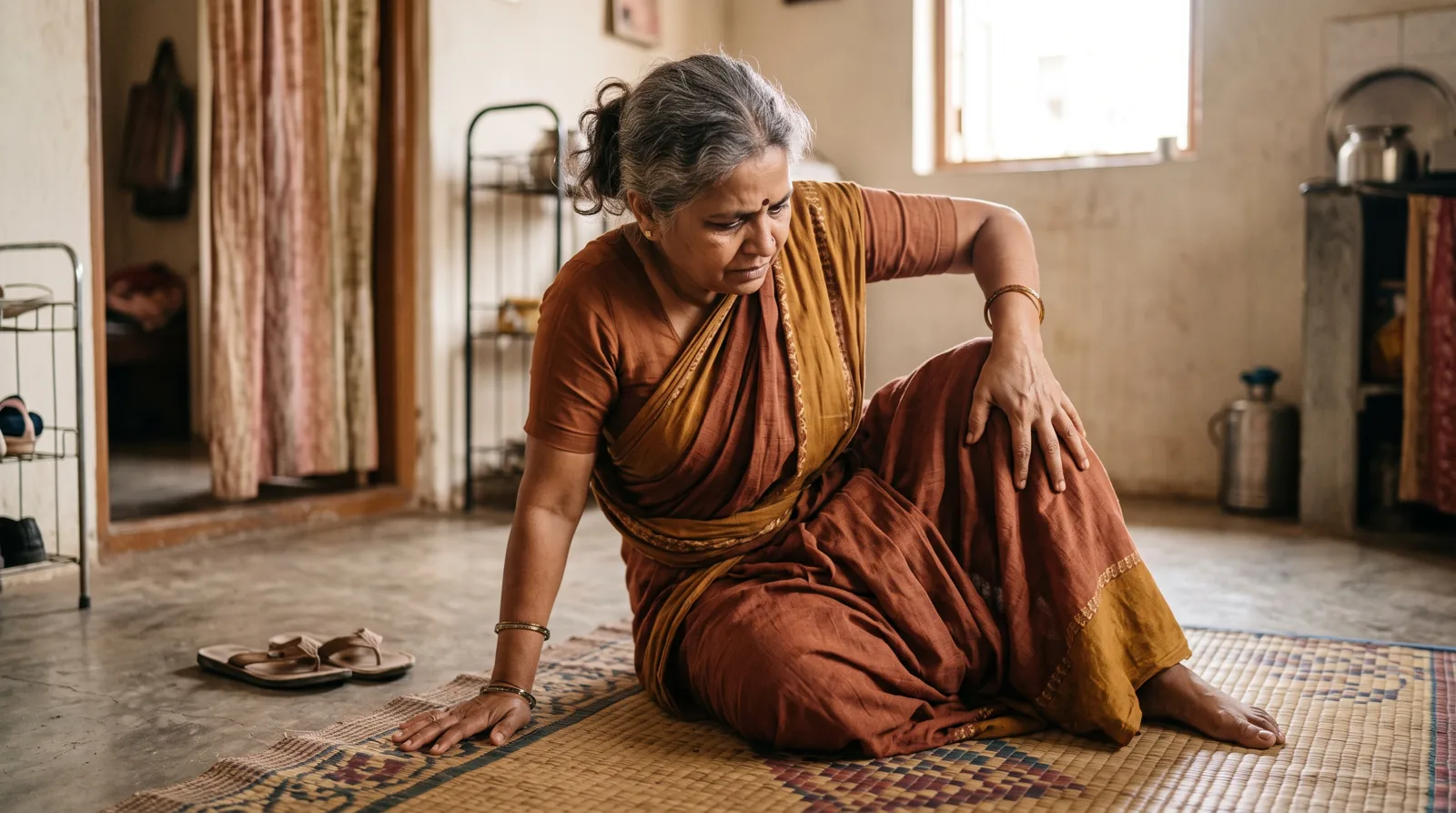
Many people watch a parent struggle with stairs and wonder whether the same lies ahead for their own knees. Age and family history play a part, but much is in your hands: strong thigh muscles, regular low-impact activity, protecting the knee from injury and less time squatting and kneeling. And if your knees already hurt, it is not too late. In the majority of the patients we treat for early knee osteoarthritis, pain eases and near-normal function returns, without surgery.
What is knee osteoarthritis?
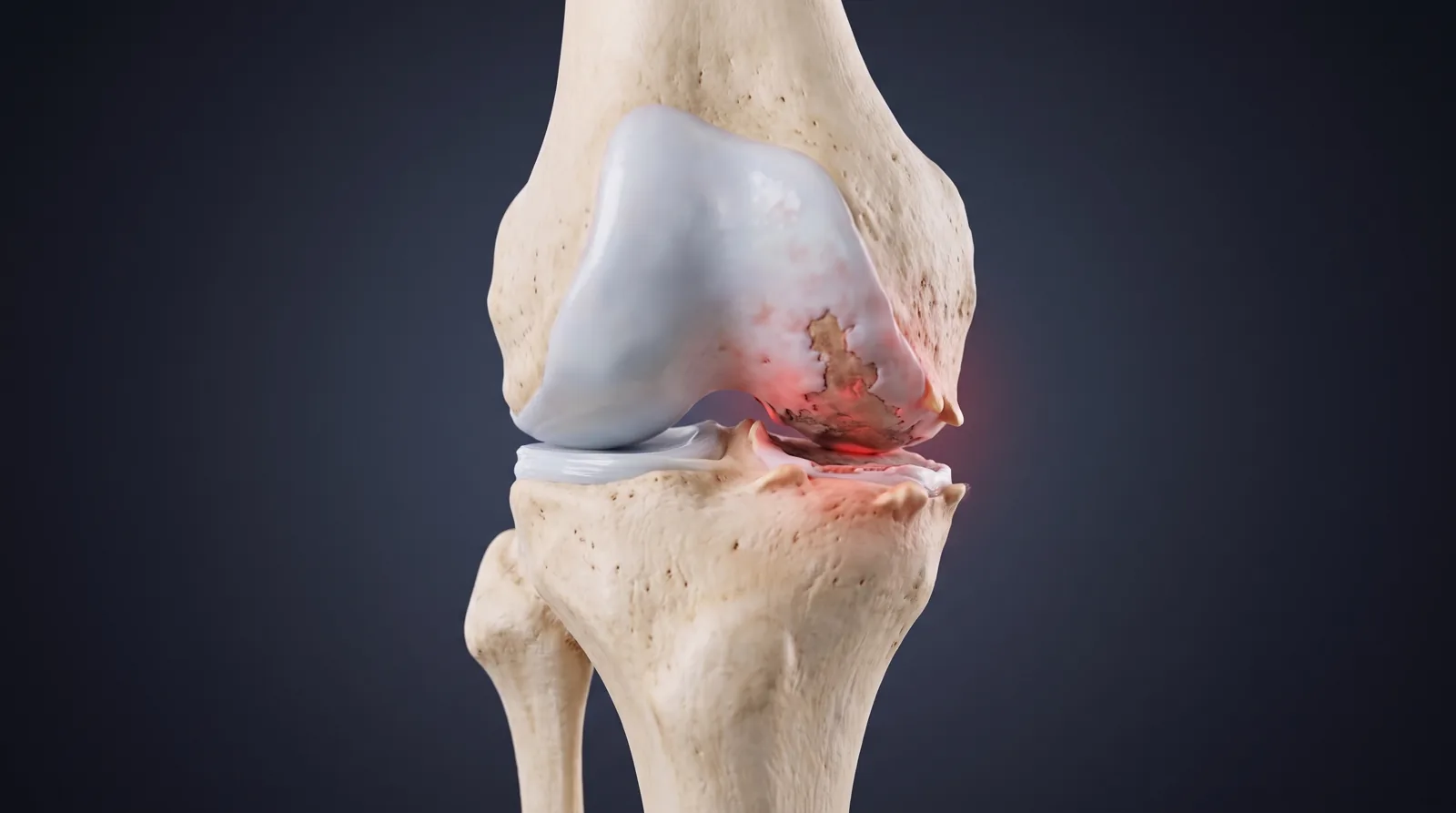
Osteoarthritis is the most common form of arthritis. It is the gradual breakdown of cartilage, the smooth tissue that covers the ends of the bones in a joint, so the joint space narrows and pain and stiffness build over time. In the knee it typically shows as:
- pain on stairs, and when you start moving after rest
- morning stiffness that eases within about half an hour
- swelling, and a grinding feeling in the joint
- difficulty squatting or sitting cross-legged, and a walking distance that slowly shrinks
Knee osteoarthritis risk factors: what you can and cannot change
You cannot change your age, as cartilage wears with the years, or a family history of osteoarthritis. Osteoarthritis is also more common in women.
You can influence the others:
- weak muscles around the knee
- a previous knee injury, including ligament injuries
- work or daily routines with repeated squatting or kneeling
- extra body weight, which adds mechanical load to the knees and is a recognised risk factor
How to prevent knee osteoarthritis: habits that protect your knees
Keep your thigh muscles strong
The quadriceps, the large muscles at the front of the thigh, steady and support the knee, and strengthening them is a core part of caring for knee osteoarthritis. Simple exercises such as tightening the thigh muscle without moving the knee, and hamstring stretches, are part of our own knee programme. Ask a physician or physiotherapist to show you the right ones, because exercises done wrongly can aggravate the knee.
Stay active, with low impact
Regular walking, stretching and strengthening reduce stiffness and support the muscles around the knee; high-impact activity may aggravate it. Exercise is recommended for osteoarthritis whatever your age.
Protect your knees from injury
A previous knee injury raises the risk of osteoarthritis later. If you injure a knee, have it properly assessed and fully rehabilitated, rather than returning to sport or heavy work while it is still swollen or unstable.
Squat and kneel less where you can
Repeated squatting and kneeling strain the knee. Many tasks in Indian homes involve both: sitting on the floor, cooking or washing at floor level, or using a squat toilet. A low stool, a raised platform for floor-level work, or a western-style toilet or commode seat takes much of that strain away.
Pay attention to weight
Extra weight increases the load over the knees. If it concerns you, talk it over with your doctor.
Can knee osteoarthritis be slowed down once it starts?
Yes. Knee osteoarthritis is progressive, but it moves at very different speeds in different people, and many continue to lead active, independent lives for years. Timely treatment, exercise and lifestyle changes can relieve symptoms, improve how the joint works and slow progression.
We are honest about one thing: treatment does not rebuild cartilage that has already been lost. What it changes is pain, stiffness, strength and how freely you move, and those are what decide how you live. Many of our patients who had already tried injections without lasting relief have still seen real improvement in pain and function.
Told your knees will only get worse?
Many people are told that knee osteoarthritis is simply age, or that replacement is the only answer. That is not the whole picture. The body has a powerful capacity to heal, and Ayurveda strengthens it with medicines and therapies that work differently from painkillers. Our therapies work on joint inflammation and on the muscle guarding that locks a painful knee, more effectively than pain medication alone.
Ayurvedic treatment for knee osteoarthritis at AVN Arogya
It begins with a physician who gives you a patient hearing. A consultation assesses and advises; your physician then decides the right pathway with you. Assessment includes a clinical examination, weight-bearing X-rays graded on the Kellgren-Lawrence scale, an MRI if a tear is suspected, and baseline pain and function scores such as WOMAC and VAS.
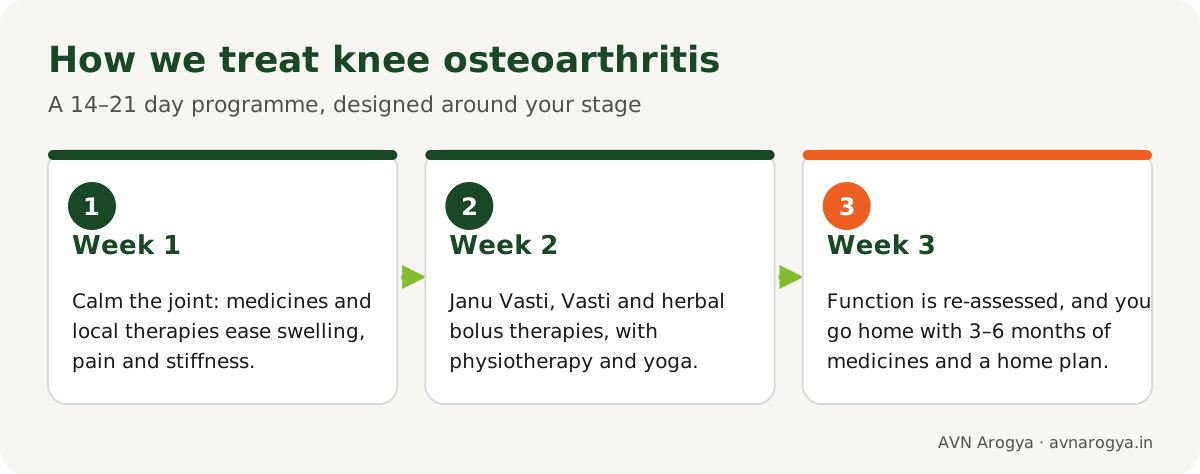
When a programme is needed, AVN treats knee osteoarthritis without surgery, usually through a 14–21 day inpatient programme designed around your stage and how inflamed the joint is. It moves in deliberate stages:
- Week 1: calm the joint. Anti-inflammatory Ayurvedic medicines and local therapies reduce swelling, pain and stiffness, with gentle movement and breathing practices to ease the muscle guarding around the knee.
- Week 2: the classical therapies and strength. These can include Janu Vasti, in which warm medicated oil is held over the knee; Vasti, a medicated enema and the cornerstone Ayurvedic treatment for degenerative joint conditions; and warm herbal bolus therapies such as Navarakizhi act as pain-relieving and nourishing. Physiotherapy builds the quadriceps and core, and yoga uses supported postures with props.
- Week 3: function and home. Walking endurance, flexibility and pain are re-assessed, and you go home with a 3–6 month course of medicines and a home plan of exercises, yoga and joint-care habits.
Our medicines are made in-house and tested to international standards for heavy metals.
What can you expect, and when is knee replacement right?
Many of our patients who were advised knee replacement have avoided or deferred it. In advanced knees, the aim is less pain and better mobility. The benefit lasts best when the home exercises and follow-up are kept up. You can watch our patients' stories in their own words.
We say plainly when surgery is right: a grade IV knee with severe pain and disability, after proper conservative care has failed, may need replacement, and we refer you to senior orthopaedic surgeons and support your recovery afterwards.
Warning signs: see a doctor urgently if
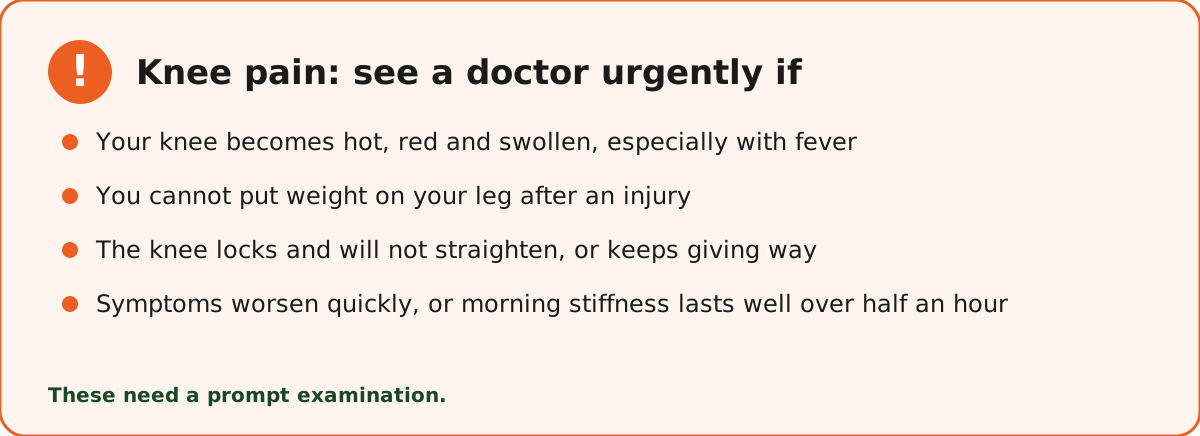
- your knee becomes hot, red and swollen, especially with fever
- you cannot put weight on your leg after an injury
- the knee locks and will not straighten, or keeps giving way
- your symptoms are worsening quickly, or morning stiffness lasts much longer than half an hour
Frequently asked questions
Can knee osteoarthritis be prevented?
Not completely, because age and family history play a part. You can lower your risk by keeping your thigh muscles strong, staying active, protecting your knees from injury and paying attention to weight.
Is walking bad for knee osteoarthritis?
Usually not. The right amount of walking and exercise does not usually make it worse, and helps stiffness and muscle strength. If walking causes severe pain or swelling, get it evaluated rather than stopping all activity.
Does squatting cause knee osteoarthritis?
Repeated squatting and kneeling, especially at work, are a recognised risk factor.
Am I too old for Ayurvedic treatment?
No. We treat adults across a wide age range and adapt the programme to your health, fitness and tolerance.
Can Ayurveda regrow knee cartilage?
No, and we will not promise it. Treatment eases pain and stiffness and improves how the knee works.
If your knees are starting to limit you, or you have been told replacement is the only answer, get a second view from physicians who see the knee as something that can still improve. Read about Ayurvedic treatment for knee osteoarthritis at AVN Arogya, or book a consultation. You can send your X-rays and reports in advance.