


Being told you have avascular necrosis (AVN) in one hip is hard enough. Hearing that the other hip is affected too can feel like the end of walking normally, especially if you have been told you will need two replacements. Take a breath. Bilateral AVN is common, it is often found in the second hip while that hip is still at an early stage, and that early stage is exactly where treatment has the most to work with. In the majority of the patients we treat for AVN, progression is arrested without surgery.
What bilateral AVN means
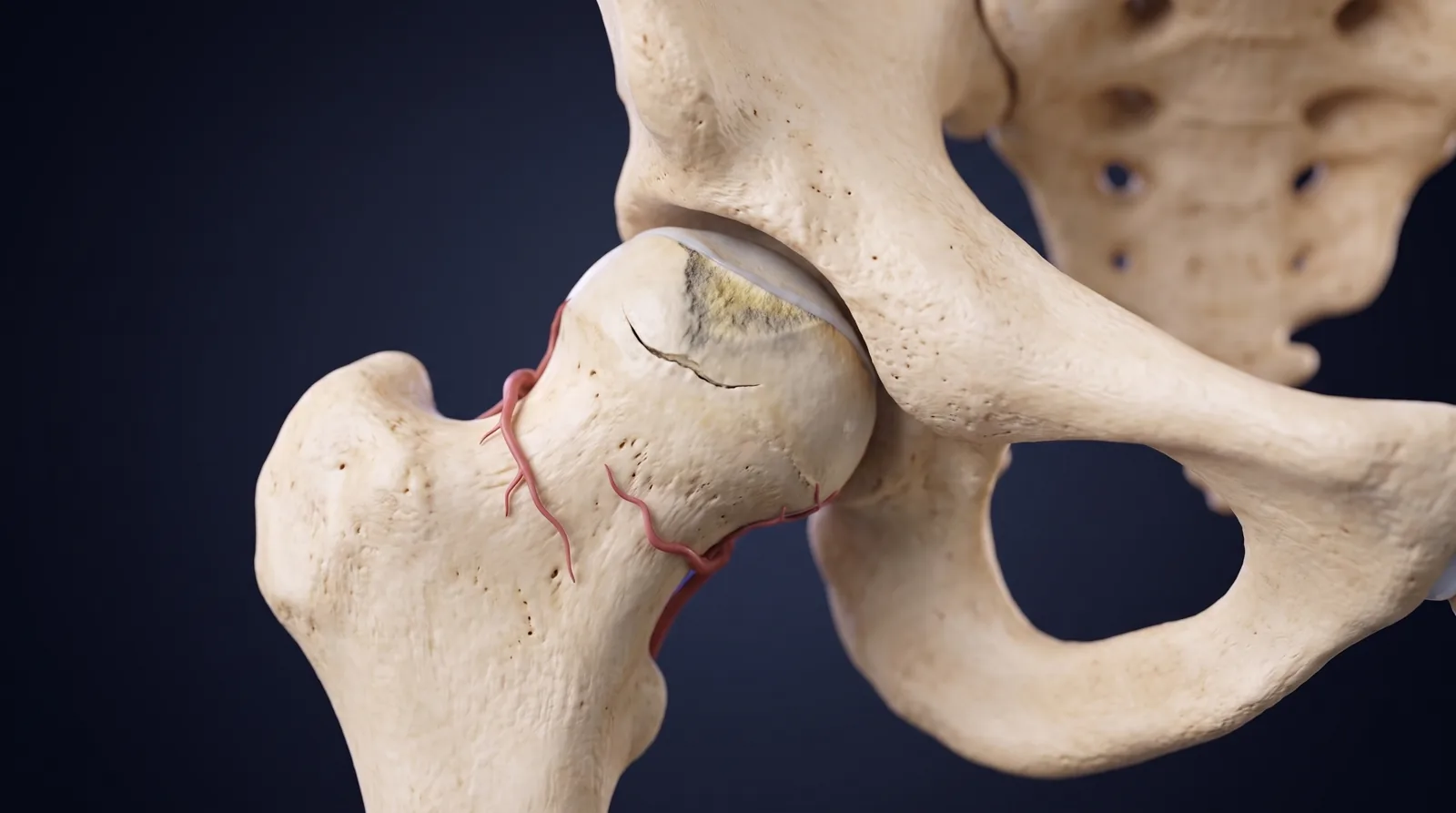
AVN happens when the blood supply to the ball of the thighbone (the femoral head) is interrupted and part of the bone weakens. "Bilateral" means it is present in both hips. The two hips are often at different stages: one may already hurt and show changes on X-ray, while the other is found only on MRI and causes little or no pain.
Why AVN so often affects both hips
AVN of the hip often affects both sides. This is especially so when it is linked to a cause that acts on the whole body rather than on one joint:
- long-term or high-dose steroid medicines — the most common cause of AVN in India
- heavy or prolonged alcohol use
- sickle-cell disease and clotting disorders
- autoimmune conditions such as lupus
AVN after an injury to one hip, such as a fracture or dislocation, usually stays on that side. If your AVN followed steroids, read Can steroids cause avascular necrosis?
Why the second hip should be checked early
The second hip may not hurt for months. By the time it does, it may have moved on to a later stage. At AVN Arogya, evaluating the other hip is part of every AVN assessment, and when it is clinically indicated we recommend an MRI of that hip to find early changes before they cause pain. An MRI can show AVN before anything appears on an X-ray.
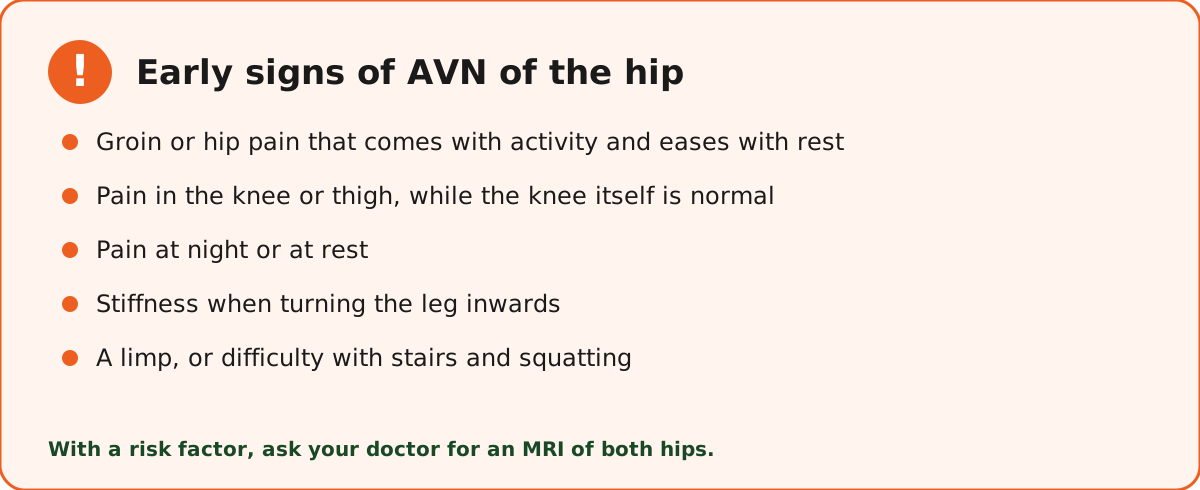
If you know you have AVN in one hip, watch the other for the early signs: groin or hip pain with activity, pain in the knee or thigh with a normal knee, pain at night, and stiffness when turning the leg inwards. Our guide to the early signs of AVN of the hip explains each one.
How we treat AVN in both hips at AVN Arogya
The body has a strong capacity to heal, and Ayurveda strengthens it with medicines and therapies that work differently from modern drugs. Because our treatment works through the whole body — reducing inflammation, improving blood flow to the bone, supporting bone metabolism and removing what gets in the way of healing — it reaches both hips at once. When both hips are affected, both are assessed and treated within the same inpatient programme.
It starts with the cause. A detailed history and a panel of blood tests show what contributed to your AVN, so each factor can be addressed. This matters even more when both hips are involved, because the cause is usually one that affects the whole body.
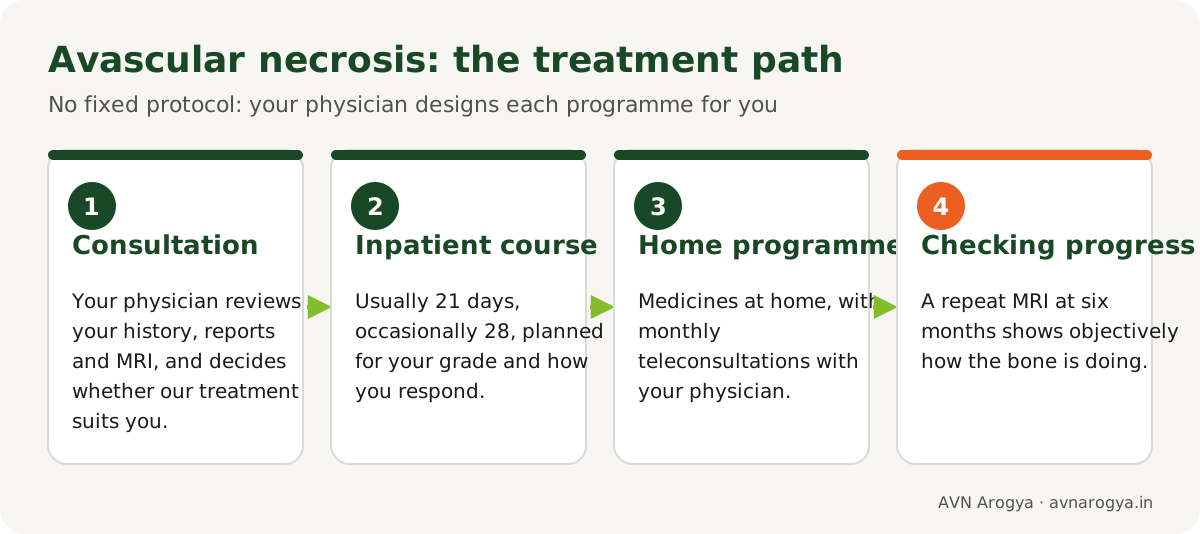
The first course is an inpatient programme, usually 21 days and sometimes extended to 28, followed by outpatient care. Every programme is designed personally by your physician; there is not a fixed protocol for everyone. It draws on our own Ayurvedic medicines, made in-house and tested to international standards for heavy metals; classical therapies chosen for you, such as Vasti and Kizhis; physiotherapy and supported yoga; and a therapeutic diet.
Protecting both hips while they heal takes more planning than protecting one. During the programme you learn walking techniques to shield the vulnerable bone, and physiotherapy strengthens the muscles around the hips without overloading them. Your physician will tell you which activities you can undergo.
Then structured follow-up: a home medicine programme, monthly teleconsultations, a repeat MRI at twelve months, and an optional 10-14-day booster stay each year.
What you can expect with bilateral AVN
Each hip is judged on its own stage. In the majority of the patients we treat, a hip at stage 1 or 2 stops progressing, with nearly complete pain relief and recovery of function and very rarely reversal. At stage 3, in the majority of the patients we treat, pain and function improve significantly and replacement is avoided, with no further progression in stage. In stage 4, we are able to help significantly reduce pain and improve function and help prevent or delay surgery. Many of our patients with AVN in both hips have kept both of their own hips.
When surgery is right for one hip
Sometimes one hip has reached stage 4, with collapse, arthritis and severe disability, while the other is still early. Then a replacement of the worse hip may be the right treatment, and we will tell you so clearly and refer you to orthopaedic surgeons. That decision does not settle the fate of the other hip. Treating the earlier hip well can help you keep it. We also support recovery after surgery.
Frequently asked questions
If one hip has AVN, will the other hip get it too?
It is possible, especially when the cause is steroids, alcohol, a blood disorder or an autoimmune condition. That is why the other hip is checked as part of every AVN assessment at AVN Arogya.
Do I need two hip replacements?
Not necessarily. The decision is made hip by hip, according to each hip's stage, your pain and your daily life. Many of our patients who were advised replacement have avoided or deferred it.
Will treatment take longer if both hips are affected?
The first inpatient course is usually 21 days, occasionally extended to 28. Your physician will tell you at consultation whether your stage, or two hips at different stages, calls for an extension.
Should I stop my steroids if both hips have AVN?
No. Never stop or change a prescribed steroid on your own; stopping suddenly can be dangerous. Our physicians ask about every medicine you take and coordinate with the doctor who prescribed it.
Seek urgent care if pain in either hip suddenly becomes severe, if you suddenly cannot put weight on a leg, or if a hip is hot and swollen with a fever.
For an honest second opinion and a chance to avoid unnecessary surgery, consult an AVN Senior Physician and bring the MRI of both hips. Read about Ayurvedic treatment for avascular necrosis at AVN Arogya, or book a consultation — you can send your MRI and reports in advance.