


Many of our patients with avascular necrosis (AVN) of the hip tell us the same story: months of groin or knee pain, treated as a muscle strain, a back problem or "just arthritis", before anyone asked for an MRI. Those months matter. Found early, while the ball of the hip is still round, AVN has its strongest chance of being stopped — in the majority of the patients we treat for AVN, progression is arrested without surgery.
Why the early signs of AVN are easy to miss
In its earliest stage, AVN may cause no symptoms at all. An ordinary X-ray at this stage is often normal, so the pain can be dismissed. The pain can also appear in places people do not connect with the hip — the groin, the thigh, the buttock or the knee.
The early signs of avascular necrosis of the hip
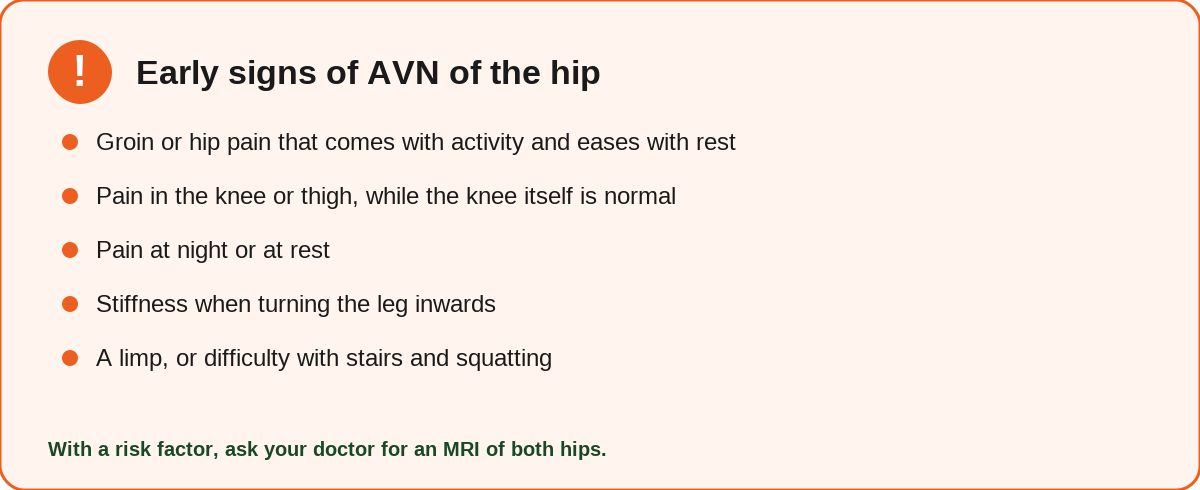
These are the signs we see most often, roughly in the order they appear.
1. Groin or hip pain that comes with activity
The first sign is usually a deep ache in the groin or hip, at first only when walking, standing or climbing. It eases with rest, so it is easy to ignore.
2. Pain in the knee or thigh, with a normal knee
Hip AVN can send pain down to the knee. If your knee hurts but the knee examination and X-ray are normal, ask for your hip to be checked.
3. Pain at night or at rest
As the condition progresses, the pain begins to come at night and during rest. Swelling inside the bone marrow, which MRI can show early, is often behind this deep, aching pain.
4. Stiffness when turning the leg inwards
Restricted hip movement, especially turning the leg inwards, is a typical sign. People notice it when sitting cross-legged, getting into a car or putting on socks and shoes.
5. A limp, or difficulty with stairs and squatting
A limp or a change in the way you walk, and difficulty with stairs, squatting or standing for long, follow as the hip weakens. Squatting and sitting on the floor are an everyday part of Indian life, so this is often the sign that finally brings people to a doctor.
Who should watch for these symptoms of AVN?
The signs above deserve an early MRI if you have any of these risk factors:
- you have taken steroid medicines — for asthma, allergies, skin or kidney disease, an autoimmune condition, a transplant or COVID-19; steroids are the most common cause of AVN in India
- regular heavy alcohol use
- a past hip injury, fracture or dislocation
- sickle-cell disease, a clotting disorder or lupus
- radiation or chemotherapy in the past
- AVN already found in the other hip — AVN often affects both hips
If you take steroids for another illness, do not stop them because of hip pain; talk to the doctor who prescribed them, and let us coordinate with them.
How early AVN is confirmed
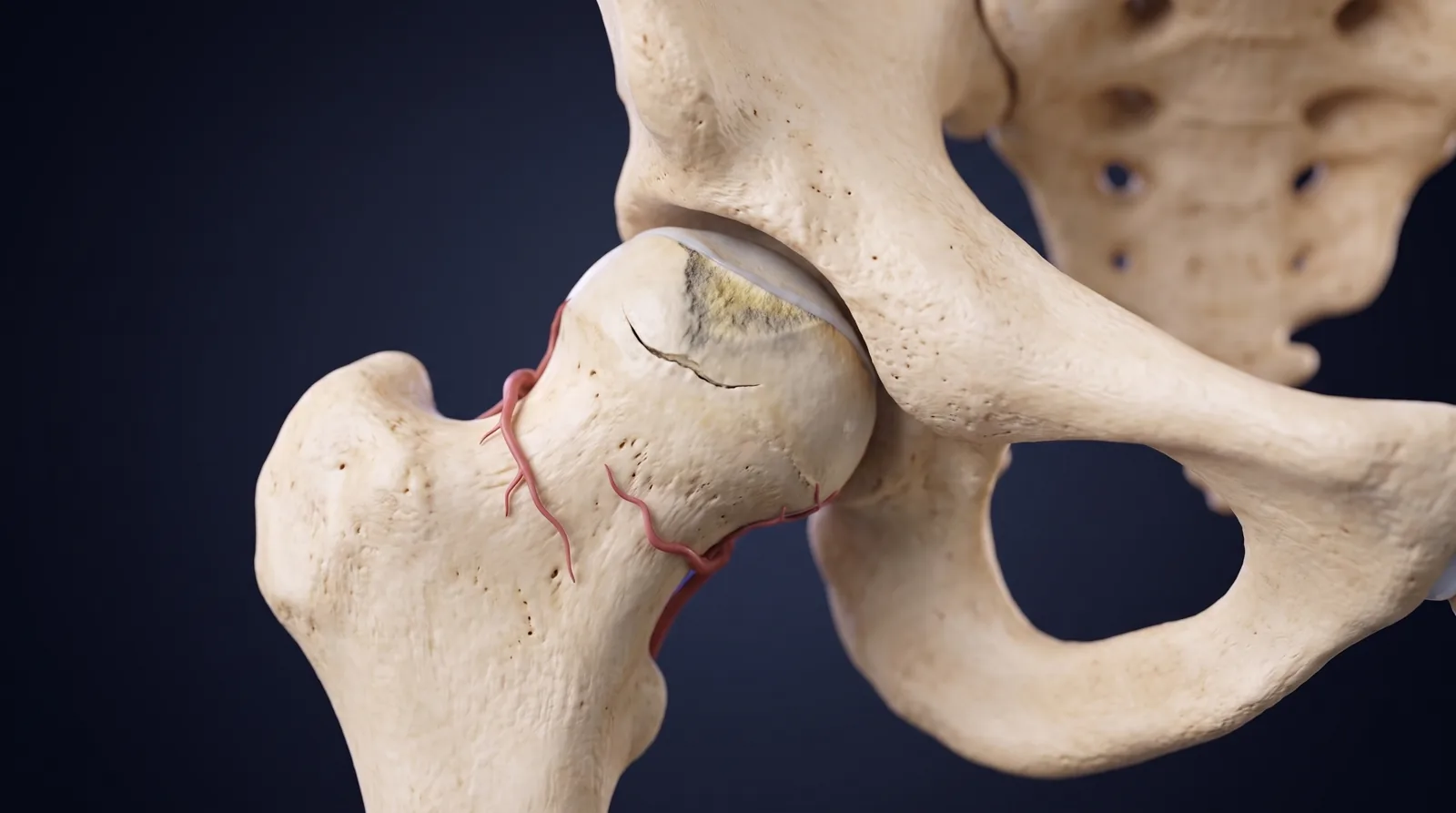
MRI is the gold standard and can find AVN before anything shows on an X-ray, often before the bone has collapsed. If you have persistent hip or groin pain, especially with a risk factor, seek an evaluation without delay rather than waiting for X-ray changes.
If your MRI shows AVN, our guide to reading your hip MRI or X-ray report explains the words, and what the grade means for you.
Why early detection changes what is possible
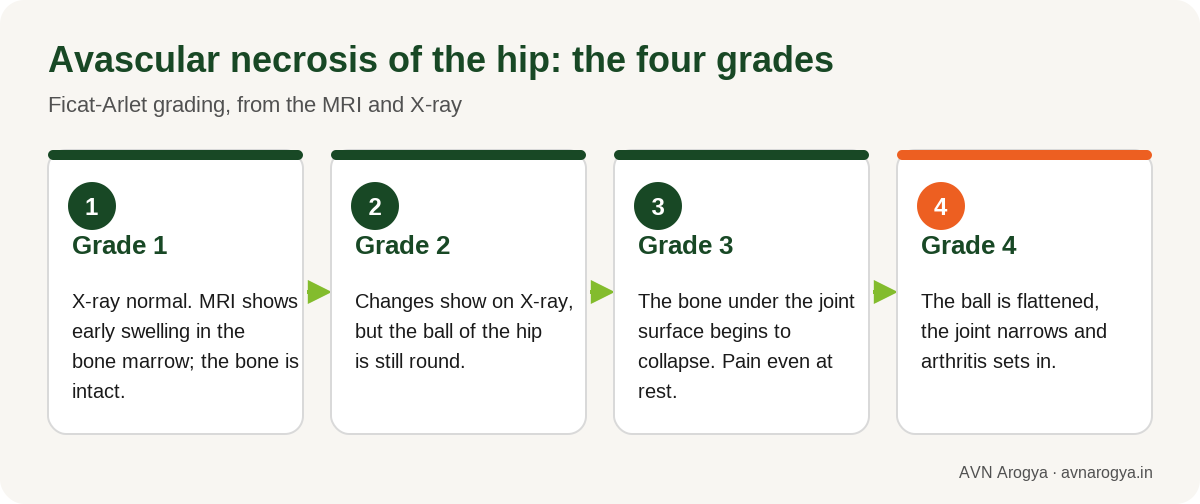
The stage at diagnosis decides most of what follows. Patients diagnosed in Grades 1 and 2, before the ball of the hip collapses, have the strongest chance of preserving the hip without surgery.
This is where Ayurveda can do the most. The body has a powerful capacity to heal, and our treatment strengthens it. It begins by finding the root causes through a detailed history and blood tests, then works to reduce inflammation, improve blood flow to the hip, strengthen the bone by supporting bone metabolism, and remove whatever is getting in the way of healing. Every programme is designed personally by your physician; there is no fixed package.
In the majority of the patients we treat at Grades 1 and 2, progression is halted, with significant pain relief and recovery of function. Occasionally, in early grades, we have even seen the damage reverse on repeat MRI — not something we promise, but a sign of what the body can do when treatment starts early.
What to do if you recognise these signs
- Do not wait for the pain to become constant. Ask your doctor for an MRI of both hips if you have a risk factor.
- Protect the hip in the meantime. Avoid running, jumping and long walks that make the pain worse; controlled activity is fine.
- Keep a list of every medicine you have taken, especially any steroid courses, with dates. It helps your physician find the cause.
- Get a specialist opinion. You can upload your MRI to AVN Arogya for a preliminary evaluation.
Frequently asked questions
Can AVN of the hip be present with a normal X-ray?
Yes. In early AVN the X-ray is usually normal, while MRI already shows changes in the bone marrow.
Is hip AVN pain constant?
Not at first. Early on, the pain usually comes with activity and eases with rest; constant pain, even at rest, is more typical of Grade 3.
Can AVN cause knee pain?
Yes. Hip AVN can cause referred pain in the knee, and AVN can also affect the knee bones themselves. Read about AVN of the knee.
At what age does AVN of the hip start?
It is often diagnosed in adults in their 30s to 50s, younger than most people with hip arthritis, though it can occur at any age. In children, AVN of the hip is called Perthes disease.
Seek urgent care if your hip or groin pain suddenly becomes severe, if you suddenly cannot put weight on the leg, if the hip is hot and swollen with a fever, or if the pain follows a fall.
For an honest second opinion and a chance to avoid unnecessary surgery, consult an AVN Senior Physician and bring your MRI. Read about Ayurvedic treatment for avascular necrosis of the hip, or book a consultation — you can send your MRI and reports in advance.