
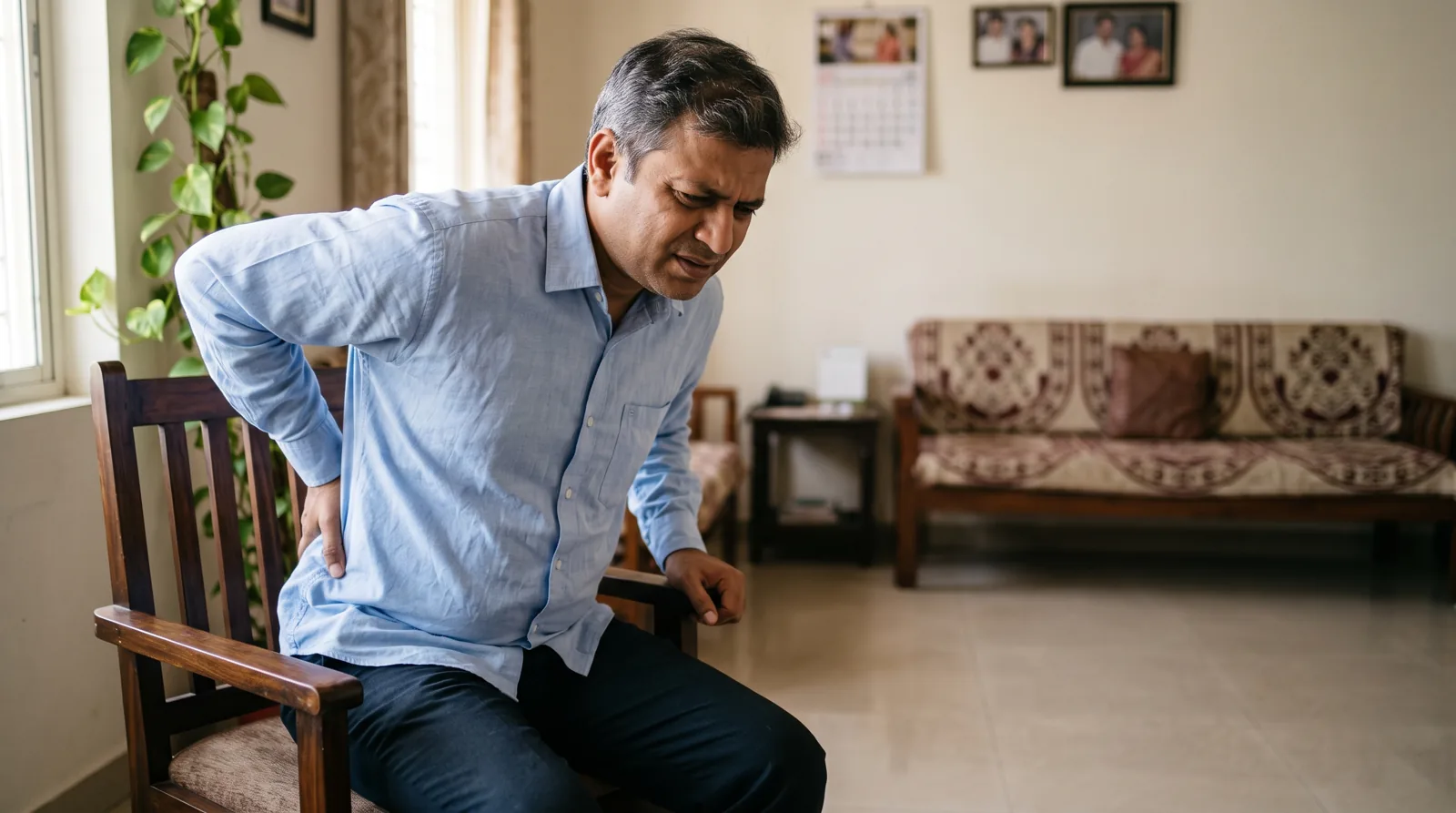
Sciatica can take over your life: the shooting pain down the leg, the sleepless nights, the fear that spine surgery is next. Many people are told to keep taking painkillers and wait, or that an operation is the only answer. At AVN Arogya we see another path every day. The irritated nerve can calm down and the leg pain can go — and in the majority of the patients we treat for sciatica, it does, without surgery.
Do you have to live with sciatica pain?
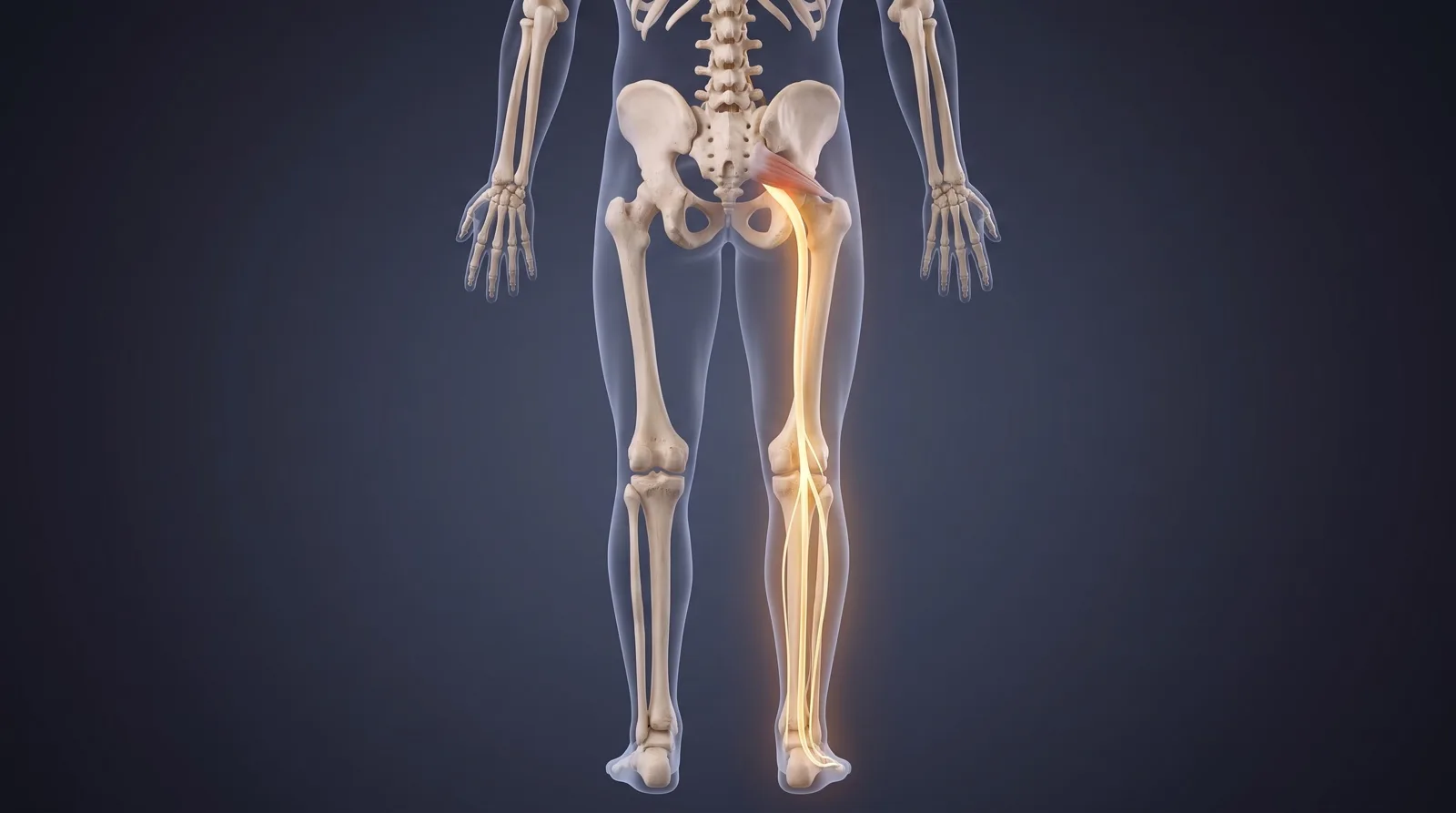
Sciatica is pain that runs along the sciatic nerve, the longest nerve in the body — from the lower back, through the buttock and down the back of the leg, usually on one side. It often brings tingling or numbness in the leg or foot, weakness in particular muscles, and pain that is worse when you sit, bend forward, cough or sneeze.
Behind it is a nerve root being pressed or irritated where it leaves the spine. The most common cause is a slipped lumbar disc; others include a narrowed spinal canal (stenosis), a tight piriformis muscle in the buttock, and one vertebra slipping forward over another (spondylolisthesis).
Painkillers quieten the pain for a while; the healing is left to chance. The body has a powerful, built-in capacity to heal: an inflamed nerve root can settle, the muscle spasm guarding the spine can release, and the muscles that support the lower back can be rebuilt. Ayurveda works on that process directly, with medicines and therapies that act differently from modern drugs. That is why "learn to live with it" is rarely the whole answer.
How Ayurvedic treatment for sciatica works
Most patients who come to our spine team arrive in pain, often after months of treatment that did not last, or with surgery already recommended. In our experience, most sciatica — whether it comes from a slipped disc, stenosis or the piriformis muscle — responds well to personalised Ayurvedic therapies, targeted physiotherapy and internal medicines, and surgery is rarely required.
Our programme treats both the inflamed nerve root and the problem in the lower spine behind it. It aims to:
- calm the inflammation around the nerve root first; strengthening is never started while the area is still inflamed
- release the deep muscle spasm acting on the sciatic nerve, with gentle stretches and therapeutic yoga introduced step by step under supervision
- ease the mechanical pressure by improving the mechanics of the lower back and core through physiotherapy
- rebuild strength once the nerve has settled, with rebuilding therapies introduced only when appropriate
AVN's protocols were developed specifically for severe nerve pain, with Ayurvedic therapies and modern physiotherapy under one roof.
Sciatica treatment at AVN Arogya, step by step
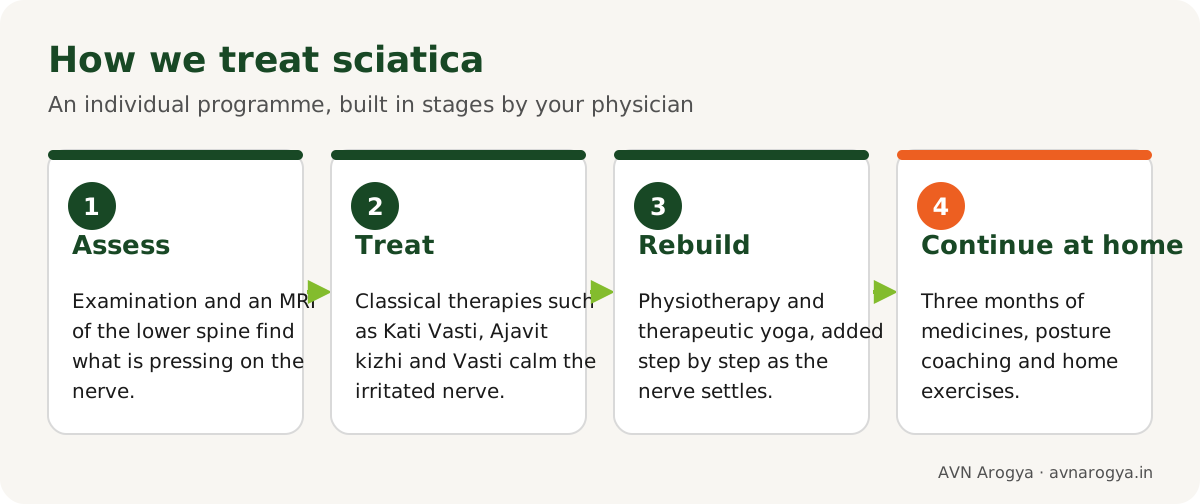
There is no fixed package. Your programme is designed personally by your physician around the stage of your condition, how inflamed the nerve is, your constitution and how you respond — an approach refined across four generations of AVN practice.
- Assessment. Your physician examines you, including the straight-leg-raise test, and reviews an MRI of the lower spine to find the cause; The physician then advises whether you need inpatient care, outpatient care or, when it is genuinely needed, a surgical referral.
- The classical therapies. After an acute-phase pain-relief protocol in the first days, treatment for sciatica is usually a 14–21 day inpatient programme. Your physician draws on Panchakarma, specialised Kerala therapies, localised Vasti therapies and supportive procedures, deciding the selection and sequence day by day. This can include Kati Vasti, our signature therapy for the lower back, in which warm medicated oil is held over the lumbar spine in a dough dam; Ajavit kizhi, a traditional dry bolus therapy designed to relieve severe sciatic pain and deep nerve compression; Elakizhi, a massage with boluses of fresh medicinal leaves warmed in medicated oil; Podi kizhi, warming herbal powder boluses that ease pain, inflammation and muscle stiffness; and Vasti, the medicated enema that is the most versatile of the Panchakarma procedures.
- Rebuilding. Physiotherapy is built into the programme, not added as an afterthought, and therapeutic yoga is introduced progressively as the nerve settles.
- Going home. You leave with a three-month home protocol of medicines, posture coaching and a home-exercise routine, with monthly teleconsult reviews.
Your medicines are individual to you, purely herbal, made at our own GMP-certified facility and tested to international standards for heavy metals.
How soon will my leg pain improve?
In our experience, most patients with mild to moderate pain feel a meaningful reduction within 7 to 10 days of intensive treatment. The radiating leg pain usually eases first; numbness takes longer, improving over about 4 to 8 weeks, and sitting becomes far easier. Within two to three months, most of our patients are back to most of their daily activities.
Progress is measured, not assumed: pain scores, the Roland-Morris disability questionnaire and quality-of-life measures are tracked through treatment. Many of our patients arrived with pain bad enough to make the leg give way; you can watch their stories in their own words.
Is relief from sciatica permanent?
"Permanent" really asks whether it will come back. When the inflammation has settled, the nerve has recovered and the back and core muscles have been rebuilt — and when you keep up the prescribed medicines, lifestyle changes and home exercises — the chance of it returning is low. The majority of the patients we treat stay well for the long term.
What we will not tell you is that your MRI will look young again. Disc wear is part of age. Our aim, and our experience, is a back and leg that no longer control your life.
When is surgery needed for sciatica?
We say this plainly because it matters. Surgery is the right path for progressive weakness in the leg or foot drop (difficulty lifting the front of the foot); for cauda equina symptoms such as loss of bladder or bowel control, which need urgent surgical referral; and for pain that stays intractable despite adequate non-surgical care. So is severe symptoms that keep worsening through a 3–6 month supervised non-surgical trial. We maintain transparent referral relationships with leading orthopaedic and spine surgeons, and we will tell you honestly if you need one. For everyone else, surgery is rarely the first road.
Warning signs: see a doctor urgently if
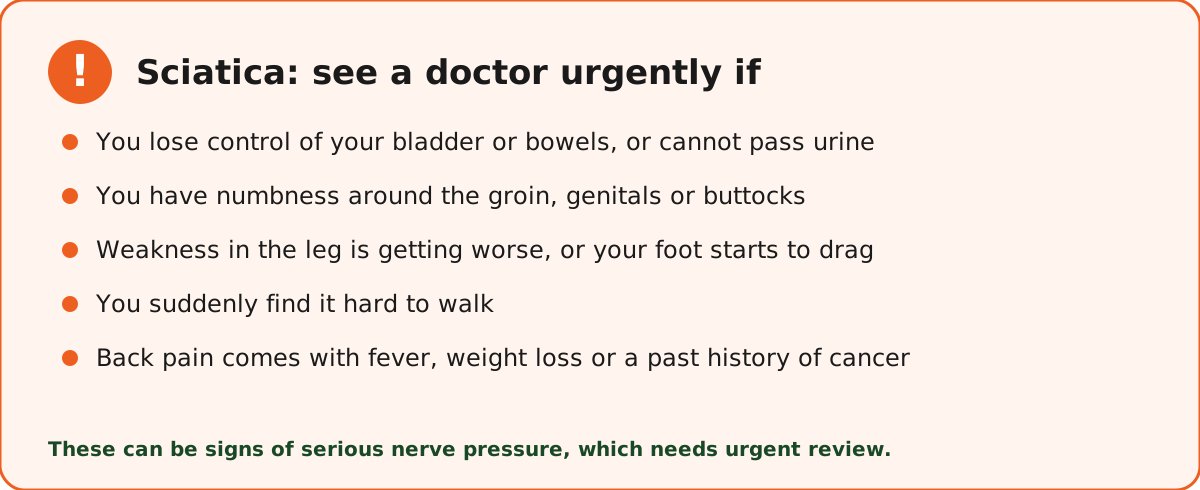
- you lose control of your bladder or bowels, or cannot pass urine
- you have numbness around the groin, genitals or buttocks
- weakness in the leg is getting worse, or your foot starts to drop or drag
- you suddenly find it hard to walk
- back pain comes with fever, unexplained weight loss, or a past history of cancer
Frequently asked questions
Can sciatica be cured permanently?
Age-related disc wear does not vanish, so no honest doctor promises a "cure". But the nerve pain, numbness and weakness can settle, and in the majority of the patients we treat for sciatica they settle without surgery and stay settled with the right follow-up.
My MRI shows a disc pressing on the nerve. Is surgery my only option?
Not necessarily. Many of our patients with large disc extrusions have avoided surgery through our structured programme. Surgery is needed if there is progressive weakness, foot drop or loss of bladder or bowel control. Send us your MRI and a physician will tell you honestly which situation you are in.
Do I need to stay in hospital?
Your physician decides after assessing you. Some patients do well with medicines and outpatient care; more severe or long-standing sciatica does best with the 14–21 day inpatient programme.
Kya sciatica thik ho sakta hai?
Sciatica ka dard aur nas ki sujan sahi ilaaj se kam ho sakti hai. Hamare anubhav mein, hamare zyaadatar mareez bina operation ke aaram paate hain aur apne kaam par laut aate hain.
If you have been told to live with sciatica, or that spine surgery is next, get a second view from physicians who treat the nerve as something that can heal. Read about Ayurvedic treatment for sciatica at AVN Arogya, or book a consultation — you can send your MRI and reports in advance.