


A report that says "cervical spondylosis", a hand that tingles, a spell of giddiness: it is natural to fear the worst. In the majority of the people we see, cervical spondylosis is not dangerous, and it responds well to treatment at AVN Arogya, usually without surgery. One uncommon complication, pressure on the spinal cord itself, does need prompt review. Knowing its signs is what keeps you safe, and the rest of this article explains them calmly.
Is cervical spondylosis dangerous? Three levels to understand
Cervical spondylosis is age-related wear in the neck: the discs lose water, small bony spurs form and the small joints thicken. Wear on a neck X-ray or MRI is common with age, even in people with no pain, so the scan alone does not tell you how serious your condition is. What matters is what, if anything, is being pressed on.
- The neck only. Pain and stiffness, sometimes spreading to the shoulders, or headaches at the back of the head. This is painful and wearing, but it is not a threat to the spinal cord.
- A pinched nerve root. When a nerve is pressed where it leaves the spine, pain, tingling or numbness can travel into the arm and particular fingers, or the grip can weaken. This needs assessment and treatment, but it is not usually an emergency. In most cases we see, these arm and hand symptoms improve with timely treatment before hand function is affected.
- Pressure on the spinal cord (cervical myelopathy). This is the level to take seriously.
Spinal cord pressure: the signs that matter
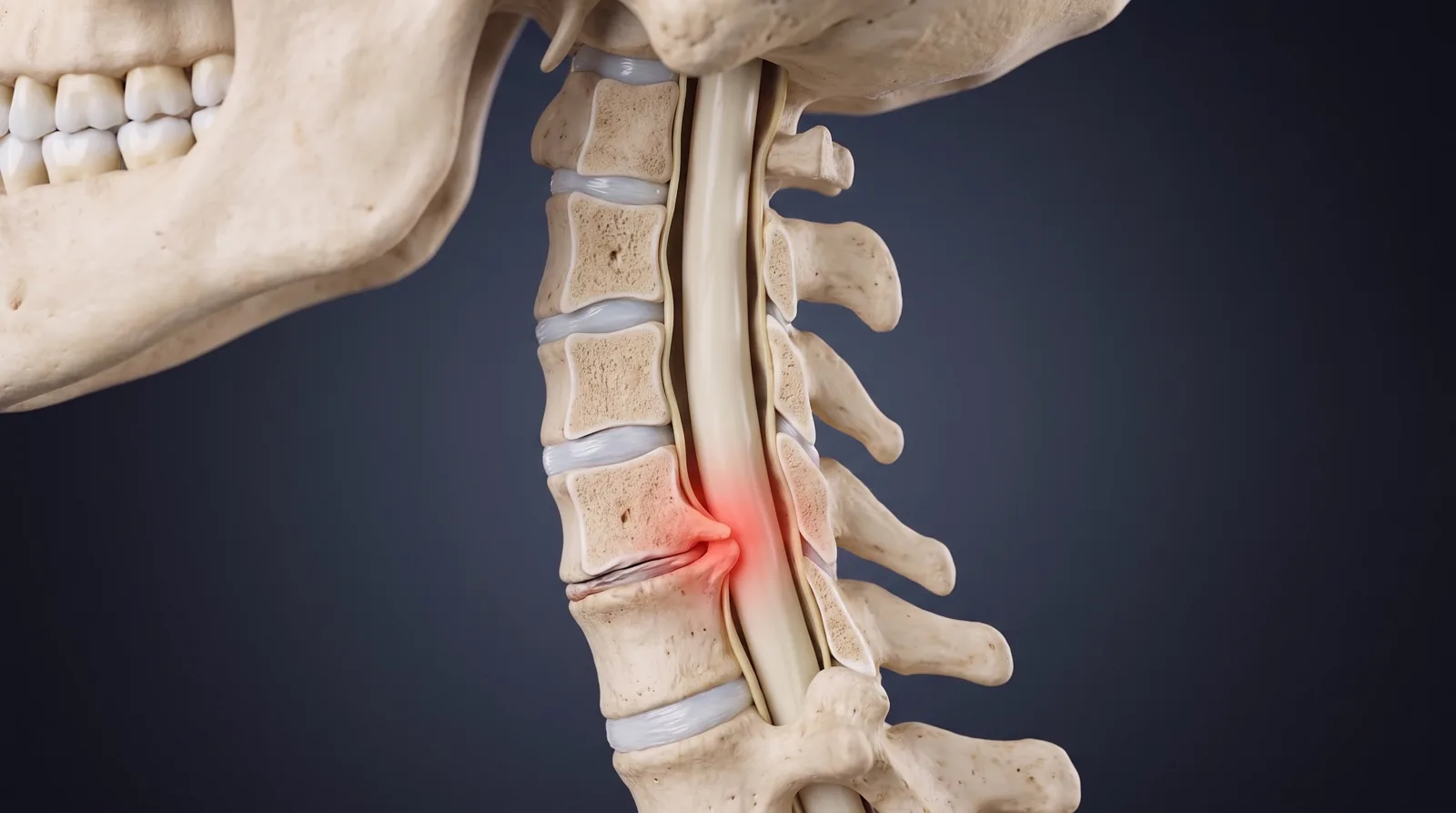
Myelopathy tends to come on slowly, so early signs are easy to put down to age or tiredness. Look out for:
- clumsy hands: trouble with buttons, writing or holding a cup, or often dropping things
- unsteady walking: feeling off balance, or needing to hold the wall or a railing
- bladder changes: urgency, or difficulty starting
- numbness or weakness in both hands, or in the legs
These signs need a neurosurgical review. Severe cord compression left unaddressed can cause lasting problems with hand function, walking and bladder control, which is why early review matters: it protects the function you still have.
Can cervical spondylosis cause death or paralysis?
Cervical spondylosis is not, by itself, a fatal condition. The real risk is disability from severe spinal cord compression that goes untreated, not death, and the warning signs above exist so that this is caught in time. One caution: if neck pain comes with chest pain, do not assume the neck is the cause. Have your heart checked first.
Can cervical spondylosis cause dizziness?
It can. Giddiness, imbalance and a spinning feeling when you turn your head are recognised symptoms of cervical spondylosis. Dizziness also has many other causes, including inner-ear problems, blood pressure changes and some medicines, so a doctor should look for these rather than blame the neck.
It helps to tell two kinds of unsteadiness apart. A spinning or light-headed feeling is different from the unsteady "my legs are not doing what I tell them" walking of myelopathy. Both deserve assessment; the second is more urgent.
Can cervical spondylosis affect the brain?
Cervical spondylosis affects the neck: its discs, joints, nerve roots and, in myelopathy, the spinal cord. It can cause headaches that start in the neck and are felt at the back of the head. Sudden dizziness with slurred speech, a drooping face, weakness on one side or double vision is not typical of cervical spondylosis; these can be signs of a stroke and need emergency care straight away.
Will my neck get worse with age?
Cervical spondylosis can progress with age, but progression is not inevitable, and many people manage their symptoms very well with timely treatment. People with very similar scans live very different lives. The difference is usually what happens to the inflammation, the irritated nerves and the muscles that hold the neck, not the bone spurs alone.
That is where Ayurveda adds something. The body has a powerful capacity to heal, and Ayurveda strengthens it with medicines and therapies that work differently from painkillers. Rather than only quietening pain, our treatment aims to calm the inflammation, nourish the tissues of the neck, relieve nerve irritation and rebuild the supporting muscles.
Ayurvedic treatment for cervical spondylosis at AVN Arogya
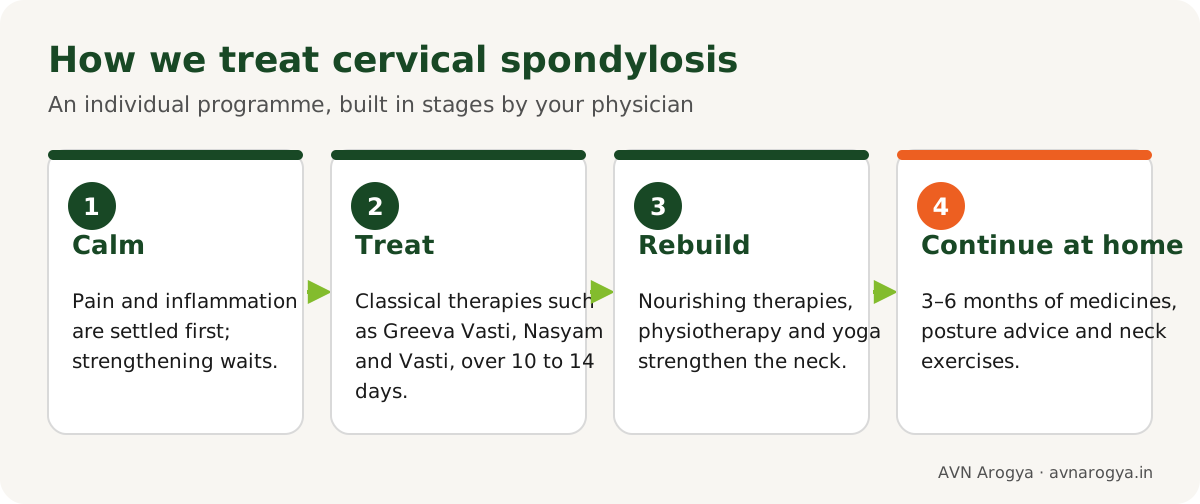
It begins with a physician who gives you a patient hearing and a thorough neurological assessment. A consultation assesses and advises; your physician then decides the right pathway with you. Diagnosis uses an MRI of the neck where needed and clinical tests such as Spurling's test and range-of-motion checks.
When a programme is needed, AVN treats cervical spondylosis without surgery, through an inpatient programme designed personally around the stage of your condition and how inflamed the neck is.
- Calming the acute phase. Strengthening is avoided while the neck is inflamed; anti-inflammatory and pain-relieving treatment comes first.
- The classical therapies, typically over 10 to 14 days as an inpatient. These can include Greeva Vasti, our signature neck therapy, in which warm medicated oil is held over the cervical spine; Nasyam, medication given through the nose, central to conditions of the neck and head; and Vasti, a medicated enema and the most versatile of the Panchakarma procedures.
- Rebuilding. Nourishing therapies support the discs and strengthen the neck muscles, with physiotherapy and yoga built in.
You go home with a 3–6 month course of oral medicines, posture advice and targeted neck exercises. AVN was the first to develop an Ayurvedic medicine specifically for cervical spinal disorders, Cervilon, made in our own pharmacy and tested to international standards for heavy metals.
Our patients typically describe the neck pain easing first, then movement returning, with arm numbness improving over four to eight weeks. If there are signs of cord compression, we refer you to the right specialist without delay. You can watch our patients' stories in their own words.
Everyday neck care that helps
- Keep screens at eye level, use a chair with good back support, and avoid looking down at your phone for long.
- Take a short stretching break every 30 to 45 minutes at a desk.
- Wear a cervical collar only if your doctor advises it, and only briefly; long use weakens the neck muscles.
These habits support treatment; they do not replace an assessment, even when symptoms seem mild.
Warning signs: see a doctor urgently if
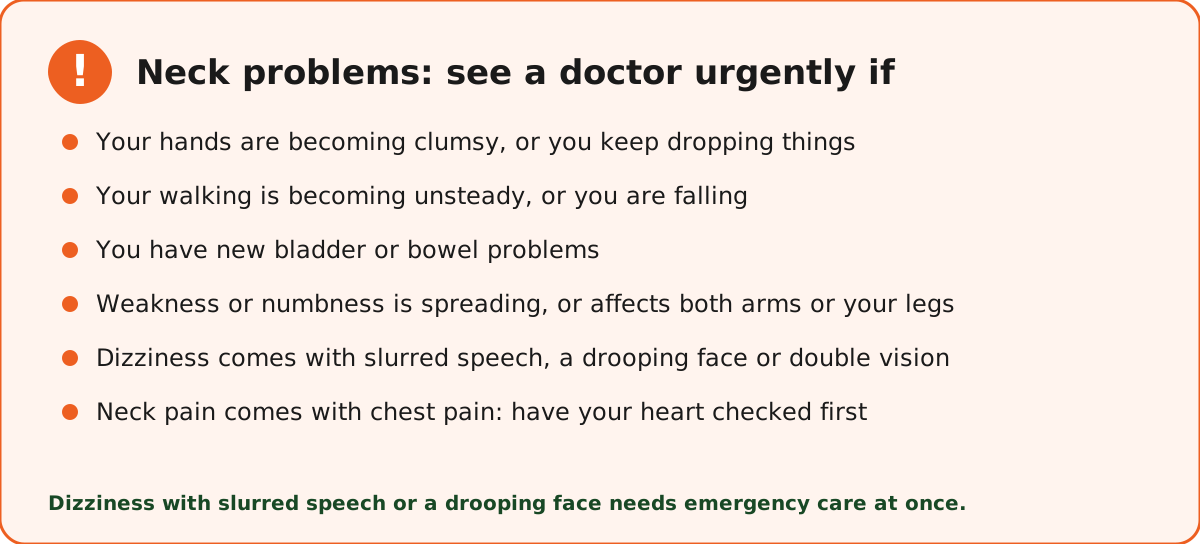
- your hands are becoming clumsy, or you keep dropping things
- your walking is becoming unsteady, or you are falling
- you have new bladder or bowel problems
- weakness or numbness is spreading, or affects both arms or your legs
- you have dizziness with slurred speech, a drooping face, one-sided weakness or double vision: go to emergency care at once
- neck pain comes with chest pain: have your heart checked first
Frequently asked questions
Is cervical spondylosis a serious disease?
For most people, no. In the majority of the patients we treat it causes pain, stiffness and sometimes arm symptoms that settle well with treatment. Only the signs of cord compression listed above call for urgent review.
Will my hands be affected?
A pinched nerve in the neck can cause numbness, tingling or a weaker grip, and in most cases we see this improves with timely treatment. Difficulty with fine tasks such as buttons or writing needs urgent evaluation.
My MRI shows compression. Is surgery my only option?
Not necessarily. Compression of a nerve root, causing arm pain or tingling, often responds well to treatment. Compression of the spinal cord with clumsy hands or unsteady walking needs urgent specialist review. Send us your reports and a physician will tell you honestly which situation you are in.
Do I need an MRI before my first visit?
No. Bring any scans you have, and your doctor will advise whether an MRI or X-ray is needed.
If you have been worried by a report, or told to live with your neck or that surgery is next, get a second view from physicians who treat the neck as something that can heal. Read about Ayurvedic treatment for cervical spondylosis at AVN Arogya, or book a consultation. You can send your MRI and reports in advance.